“The Lights”

Uncategorized

by Greg Sisco

Whatever woke Henry didn’t do it violently. He roused instantly from a deep sleep and became fully alert, but somehow it happened comfortably, like his subconscious bringing him breakfast in bed.

He’d never slept as well as he did on the cruise. Something about the subtle rocking, like a baby in its cradle, even though the mattress seemed too firm when he first lay on it, he’d never been so engulfed by sleep as he was here.

But it was the middle of the night, and for some reason he was awake.

He rolled over to put an arm around Mia and found she wasn’t there. The mattress was still warm, like she’d gotten up only a moment ago. Maybe she’d shut the bathroom door? Maybe the sound of it was what woke him? But then there would have been light spilling through the crack under the door, and there wasn’t. The stateroom was dark. Dark except for an ominous green that spilled in through the window.

“Mia?” he called. Then louder, “Mia, you okay?”

She didn’t answer. He got out of bed and flipped on the bathroom light. She wasn’t here. He was alone in the stateroom.

So she was restless and went for a walk around the ship. You’d never seen stars like you saw out here. She probably went out to look at them. Or whatever that green glow is. That ominous…green…

The voice came back to him, the strange old man at the bar, the one who said he’d done the round-the-world cruise every year since he was forty.

“Don’t you two go leaving your room tonight. The Southern Lights play tricks. Every year when we pass through these waters there’s somebody goes to sleep in their bed and the next morning we can’t find ‘em. Every year we search until there’s nowhere left to search and we say maybe they went out alone, leaned a little too far out for a look. Somebody says the sea took ‘em, but we old timers know better. It’s not the sea. It’s the lights take ‘em.”

A shiver shot through him and an instant later he scolded himself. Spook stories. Creepy legends getting into his head in his semi-awake state. Even if he felt a little more than semi-awake. Even if he felt as awake as he ever did. He didn’t believe a word of that stuff.

Not really.

But there was still an urgency to it as he dressed and ran out.

“Mia!” he called, walking through halls, a little louder than maybe he should have. Loud enough he was probably waking passengers in the rooms around him, still trying to convince himself he wasn’t panicking.

He came out of the far end of the hall onto the deck in a half-sprint, but the lights stopped him.

It was a spiral in the sky. A vast, expansive cluster of tendrils shining down like it meant to swallow the Earth. It shook him, scared him, at once made him feel menaced and taken in by its beauty. He wondered if he’d ever felt awe before, or if it was only a feeling he knew about from books. If he hadn’t, he sure knew it instantly when he felt it.

Many nights you could hardly see a thing over the rail, maybe a hint of moonlight reflecting off the water, but tonight you could see each glacier in the distance as clear as day. Every snow and ice covered protrusion standing out of the sea was bathed, along with the sea itself, in the same haunting glow as the sky.

He looked right, to the ship’s bow, to where the glow stretched as far as the eye could see, then he followed it left, all the way to the stern, where…

“Mia?” he called to the silhouette at the stern. “Mia!”

He ran. This time he gave up trying to convince himself he wasn’t frantic. He was. The figure at the stern was standing not just on the first rail but the second, and there were only three. Her shins were pressed against the top rail and her hands were out at her sides, maybe making believe she was flying. But he could see it. He could envision her leaning forward, letting her feet slip off the rail, and disappearing over the side, gone in an instant, slipping beneath the icy waves below.

He got to her before it could happen. Wrapping both arms around her waist, he ripped her from the rails and put her on her feet, nearly throwing her to the deck with the force he used.

“What are you thinking?!” he screamed. “You could have died, Mia! If you slipped, you would have died!”

She didn’t seem to hear him. Still wearing just the silk gown she slept in, having not even bothered to put on shoes for the subzero temperatures, her head was tilted to the sky, mouth open, turned up at the corners in a smile.

“Mia?” he asked, more softly, trying to make his heart slow down. “Mia, did you hear me?”

“It’s beautiful,” she whispered, a tear rolling out of one eye and freezing on her cheek. “Have you seen how beautiful it is?”

“I know,” he said, taking off his coat to drape it around her shoulders. “Come on, you can’t be out here like this.”

She put a hand on his cheek, ice cold, even colder than he would have expected, and she finally looked him in the eye.

“Kiss me, Henry.”

A part of him was still furious and a part concerned for how she was acting, but he obliged her. It was meant to be a quick kiss to placate her, after which he could put an arm around her and take her back to the room, but she wrapped both arms around his neck and pulled him into her, pressing her mouth to his with a passion he hadn’t felt in years, like she was trying to steal every breath from his lungs. She ran one ice cold hand up the back of his neck, fingers slipping through his hair, and with the other she unbuttoned and unzipped his pants.

“Whoa, whoa,” he said, pulling away to button them again. “I don’t think so.”

“Make love to me,” she said, taking a step toward the rail.

“Mia…”

She climbed the rail and sat atop it, her back to the green, glowing ocean, pulling up the hem of her gown with both hands, keeping neither on the rail.

“Make love to me here, under the lights.”

He reached out to grab her and she snatched his wrists in both hands with a strength that wasn’t her own. She pulled him into her and her eyes glowed with the same green as the lights. The same green that bathed the ocean and the sky, coming from above and below at once.

“It’s not the sea. It’s the lights that take ‘em.”

She leaned back, her hands still latched to his wrists, and pulled him with her. Through the freezing air they fell, holding each other, the green from the sky reflecting from the water, getting brighter as they got closer, until the green of both her eyes and the lights engulfed them.

The water crashed over his body and the green went black.

When he surfaced, there were no lights. The sky was full of stars and any glaciers in the distance were invisible in the dark of night. The ship was leaving him behind and the space between it and himself was growing fast. And he was alone.

“Mia?” he tried to call out, but his shocked and freezing body wouldn’t let him speak above a whisper. “Mia, where are you? Mia?”

Mia awoke in her stateroom as well-rested as she’d ever been. She couldn’t remember having slept as well in her life as she did on the cruise ship. Henry had suggested it was the way sea rocked them like a baby in a cradle. She supposed he was right.

She looked at the clock. Almost noon. Wow. Maybe one too many drinks last night.

She rolled over. Henry wasn’t next to her. Her first thought was the bathroom or the shower, but no. He didn’t seem to be here.

She shivered for a second, remembering the old man.

“It’s not the sea. It’s the lights that take ‘em.”

She shook away the thought. He’d gone out and let her sleep. Surely. She’d take a shower, get dressed, go down to the breakfast nook, and she’d find him. There, or at the gym, or playing shuffleboard.

He’d be there though. He’d be somewhere. Lights don’t take people away.

End

Greg Sisco is a novelist, screenwriter, and film director. His short fiction has appeared in anthologies such as Worst Laid Plans, Halldark Holidays, and Nox Pareidolia. Perpetually restless and habitually nomadic, he has lived in four countries and is most at home in the movie theater. A newly expanded edition of his novel “In Nightmares We’re Alone” is coming March 15 from Off Limits Press.
“In the Hands of An Angry God”

Uncategorized

by Mark Allan Gunnells

Kevin trudged from the barn back to the small cabin. The flickering firelight in the window acted as a beacon, calling him home. The snow came up to his waist so he basically had to tunnel his way through, making the relatively short journey from barn to cabin take so much longer. During the worst blizzards, the snow would freeze so solidly that he could walk on top of the crust without ever breaking through. Of course, visibility was so bad that he dared not go out when the snow was actively falling. If tunneling through the snow was the price he had to pay for a clear sky, he was willing to pay it.

As he neared the front door and the relative warmth of inside, he glanced uneasily at the sky. Still clear. It had been clear for nearly a week now. The longest streak without snow for longer than he could remember.

Not that good weather solved all his problems.

When he finally reached the cabin, he climbed the steps onto the porch, his legs feeling numb from cold. He opened the door just a crack, enough to slip his emaciated frame through, and then hurried inside and slammed the door behind him, not wanting any more heat to escape the house than necessary.

The temperature inside was cold but not frigid; at least he couldn’t see his breath puffing out in front of him. Across the one room of the cabin, his wife Julia huddled in front of the fireplace, small flames licking up in the hearth. She held herself, her worn wool shawl pulled tight around her shoulders.

She looked at Kevin and the basket in his hands. “Where’s the bucket?”

“I’m sorry, there will be no more milk. And these,” he said, holding up the basket, “will be the last of the eggs as well.”

“The cow and all the chickens?”

“I’m afraid so,” he said, setting the basket with the three measly eggs on the floor. “I’m surprised they lasted this long. I haven’t been able to properly repair the barn, and with all the cracks and holes in the wood, the cold was too much for the poor animals.”

Julia closed her eyes and released a shuddering breath. “It’s okay. We’ll be okay. We can melt snow for water, and there is plenty enough of that. For food, we have the chickens and the cows. If they can’t provide for us one way, they can provide for us another.”

Kevin was struck anew by his wife’s unfailing ability to look on the bright side. Once that optimism inspired a surge of love in him, but now he only felt annoyance. Optimism in the face of harsh reality was not admirable; it was delusional.

“I fear we will soon join the cow and chickens,” he said. “When the next quake and blizzard come – ”

“We haven’t experienced that in days, love. Perhaps that ordeal is finally over.”

 “We’ve thought that before, remember?”

“Yes, but we’ve never gone this long without the earth shaking and the snow swirling down. I believe God may have finally answered our prayers.”

Kevin didn’t bother to mention he hadn’t prayed in nearly a year. Instead, he said, “Even if the quakes and blizzards have stopped, it’s still freezing out there and we are nearly out of fuel for the fire.”

They both looked around at the empty inside of the cabin. They had broken up almost all the furniture to feed the fire. The table and chairs, the bedframe, the bookcases. Eventually even the books had become food for the flames. All that remained were two footstools, but they would provide little substance for the hungry heat.

“The barn!” Julia said suddenly, brightening. Her shawl slipped, revealing her thin neck and painfully exposed collarbones. “Since we no longer need it to house the animals, we can chop it up. Plenty of wood there.”

“Much of that wood is saturated by the snow.”

“So we start right away and start bringing it in to dry out. Perfect solution. See, you should never doubt God. He always provides.”

“Stop saying that!” Kevin screamed and kicked out at the basket. One of the eggs tumbled over the side and cracked against the floor, yellow yoke oozing out. Not that it mattered. One egg wouldn’t save them. Nothing could save them, only delay the inevitable.

Julia pulled the shawl tighter around herself, her expression setting stern like stone. “Do not blaspheme in front of me again. I won’t hear it.”

“The God you keep praying to for salvation, He is the one we need saving from. You believe He controls all that happens in this godforsaken arctic world, don’t you?”

She looked away from her husband, back toward the fire. Kevin crossed the floor in long strides, grabbed Julia by the shoulders and spun her around. “Answer me, woman! Do you believe God controls all that happens in this world?”

“Y-yes,” she stammered. “Of course.”

“Then He is responsible for the quakes and blizzards; He is responsible for the snow never melting; He is responsible for the death of our animals. Every single miserable thing that has happened, He is the one who has caused it. The Master of Suffering and Despair. If He offers up temporary but inadequate solutions, it seems only to prolong our pain for His own mysterious and perverse pleasure.”

Julia broke free and covered her ears, shaking her head. “You mustn’t say such things.”

“Why not? They are true statements. If God really wanted to help us, He would bring out the sun. Melt the snow. End this endless winter. Allow us to grow crops, properly tend animals, find others and make a community. Instead he keeps us prisoners in this icy hell, desperate and barely surviving.”

Julia looked as if she were about to protest further but then the ground began to shake. Julia cried out in surprise, but Kevin could not claim any surprise himself. Yes, it had been nearly a week and he had dared to hope, but he had always known deep down that God wasn’t done torturing them.

The world seemed to turn topsy-turvy, the entire world shaking and rumbling. The basket skittered across the floor and into the fire, destroying the remaining two eggs. Kevin and his wife both fell to the floor, clinging to one another.

When the quaking finally ceased, Kevin got unsteadily to his feet and stumbled to the window. Snow fell so heavily it was like a thick blanket, making it impossible even to see the barn. Always the same, the quake followed by the blizzard.

“This is your fault,” Julia hissed, still on her hands and knees. “God heard what you said, and this is His punishment.”

Kevin continued to stare out the window. “Blame me if you will, but I know who is truly to blame.”

Suddenly he bolted to the front door, tearing it open and running out into the blizzard, dropping to his knees in the cold snow. He tilted his head back so that the deluge of freezing flakes hit him in the face. “Damn you!” he screamed at the sky. “Goddamn you God!”

***

Eddie stared into the rounded plastic globe, watching the little white flakes swirl around, almost obscuring the tiny cabin and barn figurines inside.

His mother walked into the room and smiled. “Oh, I see you finally found your snow globe. Where was it?”

The six year old smiled up at his mother. “Under my bed.”

“Well, it’s a wonder you can locate anything in this pigsty you call a bedroom. Anyway, I’m glad you found it. I know how much you love it.” Eddie looked back at the snow globe, and as the white flakes began to settle, he gave it another vigorous shake.

End

Mark Allan Gunnells loves to tell stories. He has since he was a kid, penning one-page tales that were Twilight Zone knockoffs. He likes to think he has gotten a little better since then. He loves reader feedback, and above all he loves telling stories. He lives in Greer, SC, with his husband Craig A. Metcalf.

Sometimes the Path Chooses You

Uncategorized

by Gabino Iglesias

I was stoked when Cemetery Gates Media offered me a bit of space to talk about publishing. You see, writing, editing, and publishing are things I’m passionate about. They’re also what I do for a living. Whether it’s writing, editing someone else’s work, reviewing books, or teaching others about those things, I’m always doing something related to books, so I’m perennially ready to have a conversation about the realities of writing and publishing. In this space, I want to explore some of the paths to publication. For starters, you need to understand this: sometimes you choose your path, and sometimes the path chooses you.

            If you’re like me, you started out thinking getting an agent and selling your novel to a big publisher with offices in New York was the only way to get your work out there. Hopefully, learning about publishing has shown you there are a plethora of paths to publication. For now, we’re going to put agents, big publishers, and independent publishers of all sizes to the side and talk about self-publishing for a bit.

            Self-publishing is a lot of things. It’s also not some things you might think it is. Now, you can go online and find thousands of articles discussing some of the best reasons for self-publishing (i.e. higher royalties, less waiting, more creative control, etc.). However, I think an honest discussion about self-publishing needs to start somewhere else, so we’re going to talk about why you shouldn’t self-publish. No, I’m not saying you shouldn’t do it; I’m saying you should pursue that path for the right reasons, and in order to know what those right reasons are, you need to understand what things shouldn’t drive you to that path. Yeah, let’s get honest and talk about three things that shouldn’t be reasons for self-publishing.

            The first thing on this list is anger. I know that sounds weird, but I’ve heard from plenty of writers who turn to self-publishing because they’re angry after a rejection or because they’ve been querying agents for ten weeks or ten months without success. Listen, this gig is all about rejection. You will get turned down, I assure you. You will get turned down all the time. You will collect rejections, so consider them an invitation to submit elsewhere. However, getting turned down doesn’t mean you should turn to self-publishing just because you’re angry and frustrated. Be patient. Keep submitting. Keep querying if that’s what you want to do with your career. If your driving thought is “I’m going to get this out into the world myself and show them!” then self-publishing is not what you need. Take a break and try again.

            The second thing is the idea that self-publishing will be easier. Yes, self-publishing takes out the agent, dealing with contracts, waiting around for a publishers to give you a date, and a bunch of other little things. That said, it won’t be easier. Taking on self-publishing means you’re putting yourself in charge of getting a professional editor to look at your work or finding someone to trade edits with, finding and paying a cover artist, and taking care of the book’s layout. Then, you also have to take care of publicity and marketing unless you have a huge budget and can hire someone else to do that. Self-publishing also means that there’s a huge chance you won’t have galleys ready months in advance, so you won’t be able to get as many reviews as you want. Oh, and in case you needed an extra dose of honesty, I can tell you that huge venues don’t review self-published books. Yeah, not going to be easier at all. Some writers think the solution to this is to turn to vanity presses who will do all this for them. Don’t. Pardon my French, but vanity presses are predatory assholes that will take a lot of your money and do absolutely nothing for your book or your career. Stay as far from them as possible.

            The last thing on this short list is creative control. I know this one is problematic, so allow me to explain. When I say don’t turn to self-publishing because you want to retain absolute creative control, what I’m saying is this: you should always have creative control and will do so if you work with the right people, but self-publishing because you want to skip the editing process and refuse to accept constructive criticism is a mistake. If you start working with an editor who tells you to make an LGBTQ+ character straight to appeal to more readers, politely tell them to fuck off. That’s absolute creative control. If you self-publish because you know an editor is going to point out weaknesses in your work and force you to work on it and make it better, you’re just lazy. Hey, I told you we were going to get honest, so if that ruffles your feathers, take a deep and think about your reasons for a while.

            Maybe none of this applies to you. Maybe all of them apply to you. If any of them made you think or reconsider, my work here is done. Next time, we’ll discuss four reasons why self-publishing might just be the perfect path for you. Oh, and this is all about honesty, so we might talk a little about stigma…

We’re done here. Go write.

Dabbler. Hobbyist. Hobby-Pro. Pro.

Uncategorized

Joe Sullivan, An Editor’s Note

When I received my first guitar for Christmas in the mid-90s, the internet was just beginning to accumulate useful information for hobbyists. I could find tablature for most of my favorite Nirvana or Led Zeppelin songs, and even for some Black Flag anthems. However, I didn’t know how to properly tune my guitar, so I made approximations at what a tuned guitar might sound like, and arrived at a suitable quasi open tuning. Which eventually made it possible for me to emulate my favorite songs, in the crudest way imaginable.

I didn’t begin to speak the language of guitar players until I knew how to tune my guitar and how to recognize a dozen or so basic chords. A guitar class in high school helped this process along. Eventually, with enough practice I was able to tune my guitar to–and play chords and notes along with–other guitar players. We properly spoke the same language, however rudimentary it might have been.

By senior year my guitar teacher was also my music theory teacher and I was able to properly read and write music for multiple instruments. He was an extraordinary guitar player, and made a steady second income with a jazz band that played every weekend. When I came up short on a song I had written in my spare time, and brushed off his criticism along the lines of ‘Well, it’s really just a hobby, so no biggie if it sucks,’ he taught me a simple lesson about the difference in dedication and work ethic between a hobbyist and a pro. There is no proper difference between a hobbyist and a pro. They speak the same language. There was something I misunderstood about the language, and that I could improve the song, or I could toss the piece, but I shouldn’t be under the impression that I was fluent in the language and technique of ‘hobbyist musicians’ aka musicians.

In high school I was also interested in Greek philosophy. I figured I’d read enough Plato that I could tackle any of the problems of philosophy through the Socratic method. I was quickly disabused of this notion in my first few philosophy classes in college. In college you run into many philosophic dabblers. My best friend at the time wanted me to read his paper on ethics. He was an anthropology student, so he had a vague notion of particularism and really wanted to show the strength of cultural relativism when tasked with the questions that plagued 21st Century America. I plainly told him that we didn’t speak the same language and handed him a copy of G.E. Moore’s Principia Ethica. He plainly told me that traditions don’t matter; that anyone could philosophize.

A few years later I was in my early 20s and still hadn’t learned the most basic of lessons. I was writing free form poetry without any notion of the traditions of poetry. I didn’t know what an iamb was at this point, and anyone who knew what a rondeau was would read the first two lines of something I’d written and walk away wide-eyed. No one wrote form poetry in 2003, so why would I bother studying it? But no one was reading what I’d written, so I studied the traditions, practiced forms, and eventually published poems within the contemporary aesthetic.

Maybe you’re still reading this because you’re a hobbyist/hobby-pro level author, and are curious if I’m going to make a point about writing, or publishing, because I’m an editor and we pay decent rates. You understand how easy it is to dismiss an acquaintance who sends you a piece with terrible grammar, no notion of the basic elements that constitute a story. My problem is that most pieces I receive are competent-to-excellent stories. We speak the same language.

I’m a hobbyist publisher looking to put out professional stories. I’d like to encourage writers on their path toward their first publication or their 50th. I love sci-fi, but don’t send me a story that you wrote for Analog that happens to have creepy elements because you’ll get a credit toward SFWA eligibility. Unnerving Magazine, Silver Shamrock, Vastarien, PseudoPod, NoSleep, Nightmare Mag are brands with their own sublanguages. If you truly want to level up from competent hobbyist to hobby-pro you have to write for each unique brand and each unique call. Yes, it’s time-intensive. I have a day job, too.

“Trivia Night at the Dr. Neil Trivett Global Atmosphere Watch Observatory”

Uncategorized

by Corey Farrenkopf

The first knock came as Master cpl. Keith asked question fifteen.

Which Native People are credited as the source of the Wendigo myth? 

It was Trivia night at the Dr. Neil Trivett Global Atmosphere Watch Observatory in Alert, Canada. Or, more accurately, it was trivia night at the Canadian Forces station just down the road from the Dr. Neil Trivett Global Atmosphere Watch Observatory. The guys liked the other name better, the air of intellect it added, so it stuck. Twelve men and two women sat in the room, some from the weather observatory, the rest from the army installation, all trying to whittle away another night in the northernmost settlement on the continent.

The sun hadn’t risen in a month. The outpost’s lights illuminated a sea of snow mounding up against the low rectangular living quarters and the hangar. Buildup caused the roof to groan, letting the gathering know it was time to get out the shovels. Earlier that day, a polar bear had been spotted a distance from the outpost, but it never wandered near, never requiring station warrant officer Bryson to go out with his shotgun and scare it off before it got into the trash.

When the knock resounded, all eyes moved to the door on the far wall.

Everyone stationed at the outpost was accounted for.

No one liked to miss trivia night. It was the highlight of the week. Keith could see his comrades going through the mental math, doing a headcount, running rosters over their tongue, searching for a missing name which no one found. 

“Probably the wind,” Ellery, the programs manager from the weather station, said.

“Or maybe it’s that polar bear come back for round two,” the warrant officer replied.

A nervous laugh rounded the group.

“I’d say it’s the wind,” Keith said. “But let’s quit stalling. You know we do this on a timer.”

Everyone nodded in agreement.

“Ok, so question sixteen,” Keith began as the men and women lifted their pens. “The oldest shark in the sea goes by many names and can be found in the waters not too far from here. List one of its several names.”

There was the sound of writing, scribbling, tapping at unknown answers.

Then there was another knock, this time louder, more insistent.

The scribbling stopped.

There was no way it was the wind. Polar bears don’t knock.

“Who’s going to look?” Ellery asked.

She, like the rest of the group, knew the security cameras had been down, something in the wiring. No one seemed too concerned about it. There was very little crime so far from civilization. An electrician was being flown out in another week, a time frame most hadn’t minded until the third knock shivered through the thick metal frame.

“I believe that falls under the jurisdiction of the warrants officer,” Keith said, looking at Bryson.

“I don’t think that’s in my job description,” Bryson replied.

“What? You didn’t watch The Thing again, did you? Or 30 Days of Night? I told them they need to take those horror movies off the evening rotation,” Keith said, shaking his head.

The station had a cache of over five thousand movies that played across several channels on a loop. They played comedies and period pieces and more horror than Keith thought wise for an outpost five-hundred miles from the nearest town.

“No, I didn’t watch it again,” Bryson said, averting his eyes.

Everyone knew Bryson was a horror junkie. He was the only one to ever get Keith’s spooky trivia. Which actor played Freddy Krueger in Nightmare on Elms Street? Which serial killer was Leatherface based on in Texas Chainsaw Massacre?

Everyone else stuck to Pixar movies or the latest superhero trilogy.

“I’m just saying, we’re all in here. No one’s showing up for another week. There can’t be someone knocking at the door. There’s no way,” Bryson said.

“But we all hear it,” Ellery said.

All eyes were on Bryson. Everyone knew he was the guy who was supposed to handle the basic goings on at the outpost.

“Could be ice breaking,” Bryson said.

“Definitely not ice breaking,” Keith replied, hand drifting to the pistol holstered at his hip, reassuring himself it was there.

The knock came again.

“Why doesn’t the new guy get it,” Bryson said, looking at the Second Lieutenant who’d arrived earlier that month.

“You can’t do that to the kid. This one’s on you,” Keith said.

“Fucking hell, I’m not doing it,” Bryson said. “This is ridiculous. Something’s out there. We know that. No one shows up unannounced. We’ve seen the movies. It’s going to be one of those snow zombies, or a werewolf, or some other freak that’s going to eat every one of us until all the camera has left is a long shot of smoke rising from our barracks and a dog running off into the snow.”

“You did watch The Thing again,” Keith said, leveling a finger at Bryson.

“Doesn’t matter. There’s truth in fiction. I say loser opens the door,” Bryson said.

“Loser of what?” Ellery asked.

“Trivia night,” Bryson replied, as if it was an obvious answer.

The next knock was so loud it shifted a swath of snow from the roof. It pounded down on the frozen ground beside the building’s entrance.

“Sounds fair to me,” Keith agreed.

“You’re only saying that because you can’t lose,” Ellery said.

“Hey, don’t shoot the host,” Keith replied.

The doorknob started to rattle, the metal mechanism shifting back and forth, grinding against itself. The lock held. Another knock shivered through the barrier. it wasn’t frantic or concerned like someone trapped out in the snow should be. It was calm.

“So question seventeen…” Keith continued as the knocking persisted, each blow punctuating his subsequent questions, keeping a steady pace as if whatever was on the other side knew the game was winding down, that soon someone who didn’t know who the voice actor of Maui in Moana was? was going to answer, to find out who or what had been left waiting out in the snow.

End

Corey Farrenkopf lives on Cape Cod with his wife, Gabrielle, and works as a librarian. He is the fiction editor for The Cape Cod Poetry Review. His work has been published in or is forthcoming from The Southwest Review, Catapult, Tiny Nightmares, Flash Fiction Online, Bourbon Penn, Campfire Macabre, Wigleaf, and elsewhere. To learn more, follow him on twitter @CoreyFarrenkopf or on the web at CoreyFarrenkopf.com

Halldark Holidays

Uncategorized

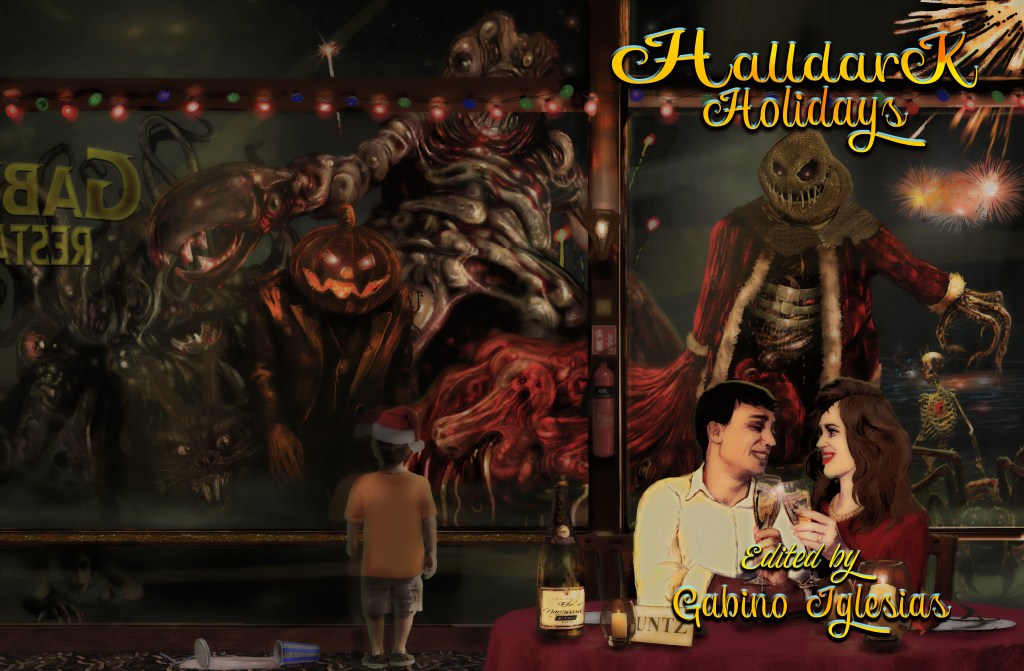
The holidays are a time for romance, sentimental longing for a simpler time…and monsters! Editor Gabino Iglesias brings you 22 stories from the hearts and absolutely twisted minds of some of horror’s finest. Right from the get-go this book slays. Greg Sisco’s “The Morbs” is like “The Lottery”, but more fucked-up. Brian Keene delivers as always with “The Hatching” and Gabino swears you might shed a tear by the time you reach Todd Robinson’s “Mother and Child”. Clara Madrigano, Cynthia Pelayo, Bev Vincent, Alan Baxter, Gina Ranalli, Kelly J. Ford, Mark Allan Gunnells are absolute killers in the genre. Check out the complete TOC below!

The eBook for Halldark Holidays is now live and you can purchase it here!

The paperback version of Halldark Holidays is available here!

Table of Contents

“The Darkness is Always There: An Introduction”

Gabino Iglesias…5

“The Morbs” Greg Sisco…9

“The Hatching” Brian Keene…25            

“She’s Back” Clara Madrigano…39

“Der Erwich Yaeger” Alessandro DiFrancesco…51                        

“A Winterland Surprise” Kathryn E. McGee…67                                              

“The Bone Fire” Alan Baxter…81                                            

“Rainbow Black” Gina Ranalli…91                                         

“An Invisible Christmas Spectacular” Bev Vincent…97

“Elmreach” Jonathan Duckworth…103

“Frito Pie” Kelly J. Ford…115                                                                                

“A Total Super Miracle on 34th St.” Mackenzie Kiera…125

“O Little Town…” Mark Allan Gunnells…139

“Feu De Joie” Magnolia Strock…149

“Somebody Always Hears You” Elizabeth Hirst…157

“Christmas Every Day” Nicole Willson…171

“The Christmas Cabin” Fred Venturini…179

“What Happens in the Dark Will Soon Happen in the Light”

Michael Harris Cohen…195

“The Best Christmas Town in Maryland!” Sheri White…205

“Christmas in Quail’s Egg” Max Carrey…215

“A Wail of Christmas” Jillian Bost…225

“Holiday Traditions” Cynthia Pelayo…231

“Mother and Child” Todd Robinson…237

Flash Horror Anthology “Campfire Macabre”

Uncategorized

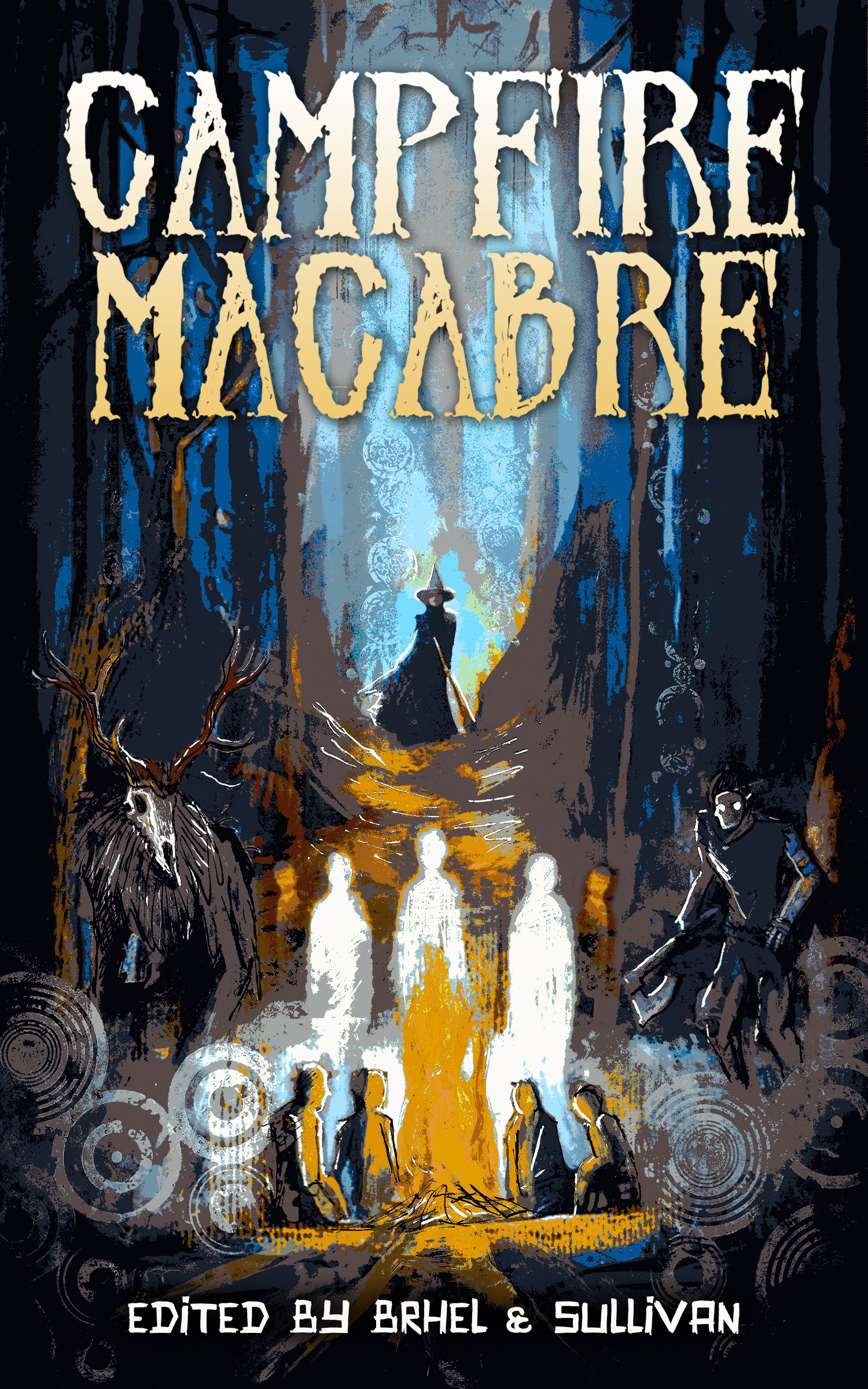
Campfire Macabre front art with text


Paperback and eBook Now Available Here!

50+ original flash horror tales organized by five themes: Spook Houses, Slashers, Witchcraft, Within the Woods, and Cemetery Chillers. A book perfect for time spent around the campfire or on a long car trip! Brand new pieces from award-winning storytellers and established authors.

Check out a detailed review of the book from Mother Horror here!

Here is the complete TOC:

“The Forever Awful House” Cynthia Pelayo

 Spook Houses

“Best Friends Forever” Priya Chand

“Making a Believer” Chad Lutzke

“RV” Mark Cowling

“Best House” Donyae Coles

“Sound Never Lasts” Corey Farrenkopf

“The Words in the House” R.K. Duncan

“The Annex” Lisa Short

“Cabin Fever” Sydney Richardson

“Ride Like the Devil” Jason Parent

“Keepers of the Light” Sonora Taylor

“Lullaby” Trevor Tolliver


Supernatural Slashers

“Final Girl” Derek Austin Johnson

“A Sleepwalker’s Hands” Corey Farrenkopf

“Scabby Abby” Lana Cooper

“So Many Teeth” Jon Gauthier

“The Crayfish God” Kevin Lucia

“All the Makings” Glen Krisch

“House of Summons” Yolanda Sfetsos

“Collateral Damage” John Lynch

“A Busy Season” Adam Godfrey

“The Sharp Edge of Midnight” Tim Waggoner


Witchcraft

“I Believe in Witches” Matthew Stott

“Bernard” Ky Huddleston

“The Art of Darkness” Regina Garza Mitchell

“The Girl in the Window” Patrick R. McDonough

“The Lake of Poppets” Jessica Ann York

“A Little Justice” Ali Seay

“Eye of Newt” Jessica McHugh

“Swallowing the Fire” V. Castro

“Manhunter” Eddie Generous

“My Evening with the Witch” Brandon Scott

“The Hag’s Gift” Villimey Mist


Within the Woods

“The Shimmer of Trees” Eric J. Guignard

“Blackjack” Kealan Patrick Burke

“Fruiting Bodies” Jude Reid

“Its Black and Beating Heart” Robert S. Wilson

“The Wishing Box” Michael Harris Cohen

“Boys and Girls Come Out to Play” Beverley Lee

“Dewdrops and Blood” Sara Tantlinger

“The Bird with the Clownish Plumage”

Hailey Piper

“heartwood” doungjai gam

“Instructions for the Broken Hearted Who

Venture into Devil’s Horn Woods”

Tiffany Michelle Brown

“Her Favorite Story” John Timm


Cemetery Chillers

“Silence Which Comforted Me” Eugie Foster

“Waking the Dead” Monique Youzwa

“The Intern” Michael J. Moore

“On Halloween Night” Janine Pipe

“Death Toll” Alex Ebenstein

“Midnight Snack” Angela Sylvaine

“The Grave Listeners” Andrew Cull

“I Would Have Rescued Them All” R.J. Joseph

“Hunger” S.H. Cooper

“Shattered World” Kenneth W. Cain

“Up from Under” Tyler Jones

“We Need Your Donations!” Elford Alley


Places We Fear to Tread

Uncategorized

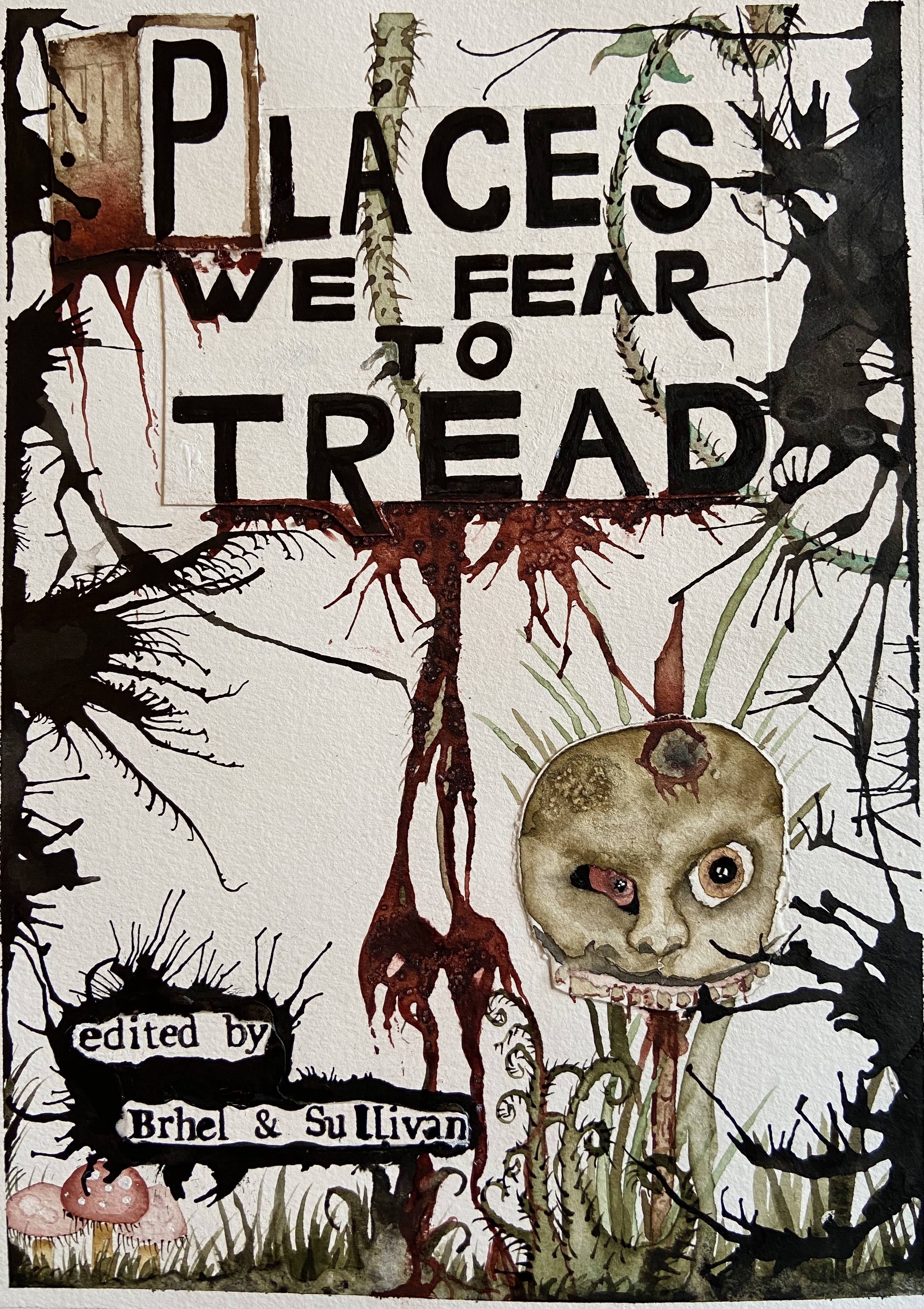
IMG_2031

Now Available in paperback and eBook!

26 authors, 26 locations, 347 pages, 100k+ words; original horror stories from many of the genre’s darkest minds. Nightmares imagined into real places; from Nigeria to Japan, North America to Australia. Locations the authors have inhabited and imbued with the sinister–hiking trails, haunted lakes, relics of faded industry, and even a Hawaiian volcano!

Is there a selkie who resides in the Wartrace Lake Dam, Tennessee?

Can you summon a godlike entity on the coast of Oregon?

There are many Crybaby Bridges, but which one belongs to author Gwendolyn Kiste?

Tales from the British Isles–of cursed beaches, remote manor houses, and plagued villages. Fresh takes on old legends, newly minted stories attached to interesting landmarks, and even personal hauntings (which will never be pinned on Google Maps.)

Featuring:

“Here in this Place is a Means to an End” Chad Lutzke

“The Storm on Kinzua Bridge” Sara Tantlinger

“The Bone Man of Sanatorium Lake” Andrew Cull

“Lost Girls Don’t Cry” Gwendolyn Kiste

“Laughter in the Night” Sonora Taylor

“This is Home” Laurel Hightower

“Bussell’s Bog” Cameron Ulam

“The Deer God” Wendy N. Wagner

“Ho‘okaulike” Michelle Mellon

“The Hound of Brackettville” Bev Vincent

“Cold-Blooded Old Times” J. A. W. McCarthy

“The Swim Instructor” Eddie Generous

“The Wrong Turn” Angela Sylvaine

“Bring Out Your Dead” Beverley Lee

“Cellophane” Michael J. Moore

“The Sad Museum” Alex Payne

“Hopscotch For Keeps” Hailey Piper

“Bare Bones” Jude Reid

“The Wet Dream” Jill Girardi

“Devil’s Elbow” C. W. Briar

“Puppet Show” Julia August

“Teke Teke Teke” Michael David Wilson

“Black Fatima” Muhammed Awal Ahmed

“The Sand Knows” Zach Shephard

“One Badly Hit Ball” John Leahy

“Women of the Mere” Jessica Ann York

Click here to purchase the eBook!

Click here to purchase the paperback!

2020 Anthology Submission Guidelines

Uncategorized

***Submissions are closed***


We’re currently looking for previously unpublished horror stories, 3-6k words, for a location-themed anthology to be released September 2020.

The theme is: local lore or location-based oddities. Write something dark into a setting you’ve experienced — it could be a place you’ve lived, or even just somewhere you’ve visited on a vacation. Is there a landmark in your town that you can write a nightmare into? Have you ever legend tripped somewhere and thought, well, that cave, mausoleum, torture tree was neat, but I wish there was more to the story?

If so, you’re welcome to send us (1) submission at cemeterygatesmedia@gmail.com in DOC or RTF form. Deadline August 1, 2020. However, we’ll begin reading and accepting stories well before August, so the window may close earlier.

Paying .05/word per accepted submission for First Rights Publishing, and asking that you don’t republish your story until August 1, 2021.

In our fifth year of publishing we’re looking to expand our reach into 21st Century folklore, urban legends, and the space between creepypasta and literary horror. We will favor stories that name real locations one can visit in person. Our tales often give brief histories for locations. For examples of what we’re looking for, see Other Voices, Other Tombs; At the Cemetery Gates: Year One and Volume 2; or Corpse Cold: New American Folklore

-Joe Sullivan, Editor

Grief is a False God

Uncategorized

baal_profile_corrected

Elijah Keene is trying to get by after the untimely passing of his beloved wife Jess. Overwhelmed with the responsibility of being a single father, failing as a farmer, even coming up short as a son — he struggles to distance himself from his grief. Elijah soon discovers that an unspeakable horror has arisen from the land which his family has cultivated for generations. An entity of which his own father and deceased mother may have been all too aware. GRIEF IS A FALSE GOD is a chilling novelette by Gemma Amor, featuring vibrant illustrations from Anibal Santos.

You can purchase the 8 x 10 paperback here

or get the gorgeous 8.5 x 11 hardcover edition here

jezebel_with_death