Dabbler. Hobbyist. Hobby-Pro. Pro.

Uncategorized

Joe Sullivan, An Editor’s Note

When I received my first guitar for Christmas in the mid-90s, the internet was just beginning to accumulate useful information for hobbyists. I could find tablature for most of my favorite Nirvana or Led Zeppelin songs, and even for some Black Flag anthems. However, I didn’t know how to properly tune my guitar, so I made approximations at what a tuned guitar might sound like, and arrived at a suitable quasi open tuning. Which eventually made it possible for me to emulate my favorite songs, in the crudest way imaginable.

I didn’t begin to speak the language of guitar players until I knew how to tune my guitar and how to recognize a dozen or so basic chords. A guitar class in high school helped this process along. Eventually, with enough practice I was able to tune my guitar to–and play chords and notes along with–other guitar players. We properly spoke the same language, however rudimentary it might have been.

By senior year my guitar teacher was also my music theory teacher and I was able to properly read and write music for multiple instruments. He was an extraordinary guitar player, and made a steady second income with a jazz band that played every weekend. When I came up short on a song I had written in my spare time, and brushed off his criticism along the lines of ‘Well, it’s really just a hobby, so no biggie if it sucks,’ he taught me a simple lesson about the difference in dedication and work ethic between a hobbyist and a pro. There is no proper difference between a hobbyist and a pro. They speak the same language. There was something I misunderstood about the language, and that I could improve the song, or I could toss the piece, but I shouldn’t be under the impression that I was fluent in the language and technique of ‘hobbyist musicians’ aka musicians.

In high school I was also interested in Greek philosophy. I figured I’d read enough Plato that I could tackle any of the problems of philosophy through the Socratic method. I was quickly disabused of this notion in my first few philosophy classes in college. In college you run into many philosophic dabblers. My best friend at the time wanted me to read his paper on ethics. He was an anthropology student, so he had a vague notion of particularism and really wanted to show the strength of cultural relativism when tasked with the questions that plagued 21st Century America. I plainly told him that we didn’t speak the same language and handed him a copy of G.E. Moore’s Principia Ethica. He plainly told me that traditions don’t matter; that anyone could philosophize.

A few years later I was in my early 20s and still hadn’t learned the most basic of lessons. I was writing free form poetry without any notion of the traditions of poetry. I didn’t know what an iamb was at this point, and anyone who knew what a rondeau was would read the first two lines of something I’d written and walk away wide-eyed. No one wrote form poetry in 2003, so why would I bother studying it? But no one was reading what I’d written, so I studied the traditions, practiced forms, and eventually published poems within the contemporary aesthetic.

Maybe you’re still reading this because you’re a hobbyist/hobby-pro level author, and are curious if I’m going to make a point about writing, or publishing, because I’m an editor and we pay decent rates. You understand how easy it is to dismiss an acquaintance who sends you a piece with terrible grammar, no notion of the basic elements that constitute a story. My problem is that most pieces I receive are competent-to-excellent stories. We speak the same language.

I’m a hobbyist publisher looking to put out professional stories. I’d like to encourage writers on their path toward their first publication or their 50th. I love sci-fi, but don’t send me a story that you wrote for Analog that happens to have creepy elements because you’ll get a credit toward SFWA eligibility. Unnerving Magazine, Silver Shamrock, Vastarien, PseudoPod, NoSleep, Nightmare Mag are brands with their own sublanguages. If you truly want to level up from competent hobbyist to hobby-pro you have to write for each unique brand and each unique call. Yes, it’s time-intensive. I have a day job, too.

“Trivia Night at the Dr. Neil Trivett Global Atmosphere Watch Observatory”

Uncategorized

by Corey Farrenkopf

The first knock came as Master cpl. Keith asked question fifteen.

Which Native People are credited as the source of the Wendigo myth? 

It was Trivia night at the Dr. Neil Trivett Global Atmosphere Watch Observatory in Alert, Canada. Or, more accurately, it was trivia night at the Canadian Forces station just down the road from the Dr. Neil Trivett Global Atmosphere Watch Observatory. The guys liked the other name better, the air of intellect it added, so it stuck. Twelve men and two women sat in the room, some from the weather observatory, the rest from the army installation, all trying to whittle away another night in the northernmost settlement on the continent.

The sun hadn’t risen in a month. The outpost’s lights illuminated a sea of snow mounding up against the low rectangular living quarters and the hangar. Buildup caused the roof to groan, letting the gathering know it was time to get out the shovels. Earlier that day, a polar bear had been spotted a distance from the outpost, but it never wandered near, never requiring station warrant officer Bryson to go out with his shotgun and scare it off before it got into the trash.

When the knock resounded, all eyes moved to the door on the far wall.

Everyone stationed at the outpost was accounted for.

No one liked to miss trivia night. It was the highlight of the week. Keith could see his comrades going through the mental math, doing a headcount, running rosters over their tongue, searching for a missing name which no one found. 

“Probably the wind,” Ellery, the programs manager from the weather station, said.

“Or maybe it’s that polar bear come back for round two,” the warrant officer replied.

A nervous laugh rounded the group.

“I’d say it’s the wind,” Keith said. “But let’s quit stalling. You know we do this on a timer.”

Everyone nodded in agreement.

“Ok, so question sixteen,” Keith began as the men and women lifted their pens. “The oldest shark in the sea goes by many names and can be found in the waters not too far from here. List one of its several names.”

There was the sound of writing, scribbling, tapping at unknown answers.

Then there was another knock, this time louder, more insistent.

The scribbling stopped.

There was no way it was the wind. Polar bears don’t knock.

“Who’s going to look?” Ellery asked.

She, like the rest of the group, knew the security cameras had been down, something in the wiring. No one seemed too concerned about it. There was very little crime so far from civilization. An electrician was being flown out in another week, a time frame most hadn’t minded until the third knock shivered through the thick metal frame.

“I believe that falls under the jurisdiction of the warrants officer,” Keith said, looking at Bryson.

“I don’t think that’s in my job description,” Bryson replied.

“What? You didn’t watch The Thing again, did you? Or 30 Days of Night? I told them they need to take those horror movies off the evening rotation,” Keith said, shaking his head.

The station had a cache of over five thousand movies that played across several channels on a loop. They played comedies and period pieces and more horror than Keith thought wise for an outpost five-hundred miles from the nearest town.

“No, I didn’t watch it again,” Bryson said, averting his eyes.

Everyone knew Bryson was a horror junkie. He was the only one to ever get Keith’s spooky trivia. Which actor played Freddy Krueger in Nightmare on Elms Street? Which serial killer was Leatherface based on in Texas Chainsaw Massacre?

Everyone else stuck to Pixar movies or the latest superhero trilogy.

“I’m just saying, we’re all in here. No one’s showing up for another week. There can’t be someone knocking at the door. There’s no way,” Bryson said.

“But we all hear it,” Ellery said.

All eyes were on Bryson. Everyone knew he was the guy who was supposed to handle the basic goings on at the outpost.

“Could be ice breaking,” Bryson said.

“Definitely not ice breaking,” Keith replied, hand drifting to the pistol holstered at his hip, reassuring himself it was there.

The knock came again.

“Why doesn’t the new guy get it,” Bryson said, looking at the Second Lieutenant who’d arrived earlier that month.

“You can’t do that to the kid. This one’s on you,” Keith said.

“Fucking hell, I’m not doing it,” Bryson said. “This is ridiculous. Something’s out there. We know that. No one shows up unannounced. We’ve seen the movies. It’s going to be one of those snow zombies, or a werewolf, or some other freak that’s going to eat every one of us until all the camera has left is a long shot of smoke rising from our barracks and a dog running off into the snow.”

“You did watch The Thing again,” Keith said, leveling a finger at Bryson.

“Doesn’t matter. There’s truth in fiction. I say loser opens the door,” Bryson said.

“Loser of what?” Ellery asked.

“Trivia night,” Bryson replied, as if it was an obvious answer.

The next knock was so loud it shifted a swath of snow from the roof. It pounded down on the frozen ground beside the building’s entrance.

“Sounds fair to me,” Keith agreed.

“You’re only saying that because you can’t lose,” Ellery said.

“Hey, don’t shoot the host,” Keith replied.

The doorknob started to rattle, the metal mechanism shifting back and forth, grinding against itself. The lock held. Another knock shivered through the barrier. it wasn’t frantic or concerned like someone trapped out in the snow should be. It was calm.

“So question seventeen…” Keith continued as the knocking persisted, each blow punctuating his subsequent questions, keeping a steady pace as if whatever was on the other side knew the game was winding down, that soon someone who didn’t know who the voice actor of Maui in Moana was? was going to answer, to find out who or what had been left waiting out in the snow.

End

Corey Farrenkopf lives on Cape Cod with his wife, Gabrielle, and works as a librarian. He is the fiction editor for The Cape Cod Poetry Review. His work has been published in or is forthcoming from The Southwest Review, Catapult, Tiny Nightmares, Flash Fiction Online, Bourbon Penn, Campfire Macabre, Wigleaf, and elsewhere. To learn more, follow him on twitter @CoreyFarrenkopf or on the web at CoreyFarrenkopf.com

Halldark Holidays

Uncategorized

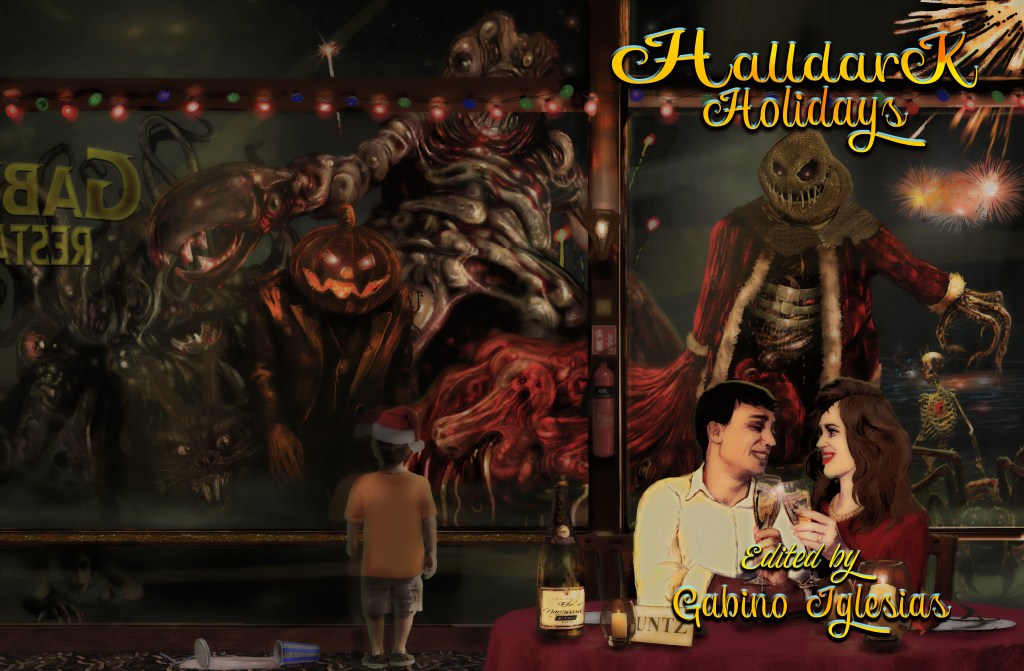
The holidays are a time for romance, sentimental longing for a simpler time…and monsters! Editor Gabino Iglesias brings you 22 stories from the hearts and absolutely twisted minds of some of horror’s finest. Right from the get-go this book slays. Greg Sisco’s “The Morbs” is like “The Lottery”, but more fucked-up. Brian Keene delivers as always with “The Hatching” and Gabino swears you might shed a tear by the time you reach Todd Robinson’s “Mother and Child”. Clara Madrigano, Cynthia Pelayo, Bev Vincent, Alan Baxter, Gina Ranalli, Kelly J. Ford, Mark Allan Gunnells are absolute killers in the genre. Check out the complete TOC below!

The eBook for Halldark Holidays is now live and you can purchase it here!

The paperback version of Halldark Holidays is available here!

Table of Contents

“The Darkness is Always There: An Introduction”

Gabino Iglesias…5

“The Morbs” Greg Sisco…9

“The Hatching” Brian Keene…25            

“She’s Back” Clara Madrigano…39

“Der Erwich Yaeger” Alessandro DiFrancesco…51                        

“A Winterland Surprise” Kathryn E. McGee…67                                              

“The Bone Fire” Alan Baxter…81                                            

“Rainbow Black” Gina Ranalli…91                                         

“An Invisible Christmas Spectacular” Bev Vincent…97

“Elmreach” Jonathan Duckworth…103

“Frito Pie” Kelly J. Ford…115                                                                                

“A Total Super Miracle on 34th St.” Mackenzie Kiera…125

“O Little Town…” Mark Allan Gunnells…139

“Feu De Joie” Magnolia Strock…149

“Somebody Always Hears You” Elizabeth Hirst…157

“Christmas Every Day” Nicole Willson…171

“The Christmas Cabin” Fred Venturini…179

“What Happens in the Dark Will Soon Happen in the Light”

Michael Harris Cohen…195

“The Best Christmas Town in Maryland!” Sheri White…205

“Christmas in Quail’s Egg” Max Carrey…215

“A Wail of Christmas” Jillian Bost…225

“Holiday Traditions” Cynthia Pelayo…231

“Mother and Child” Todd Robinson…237

Flash Horror Anthology “Campfire Macabre”

Uncategorized

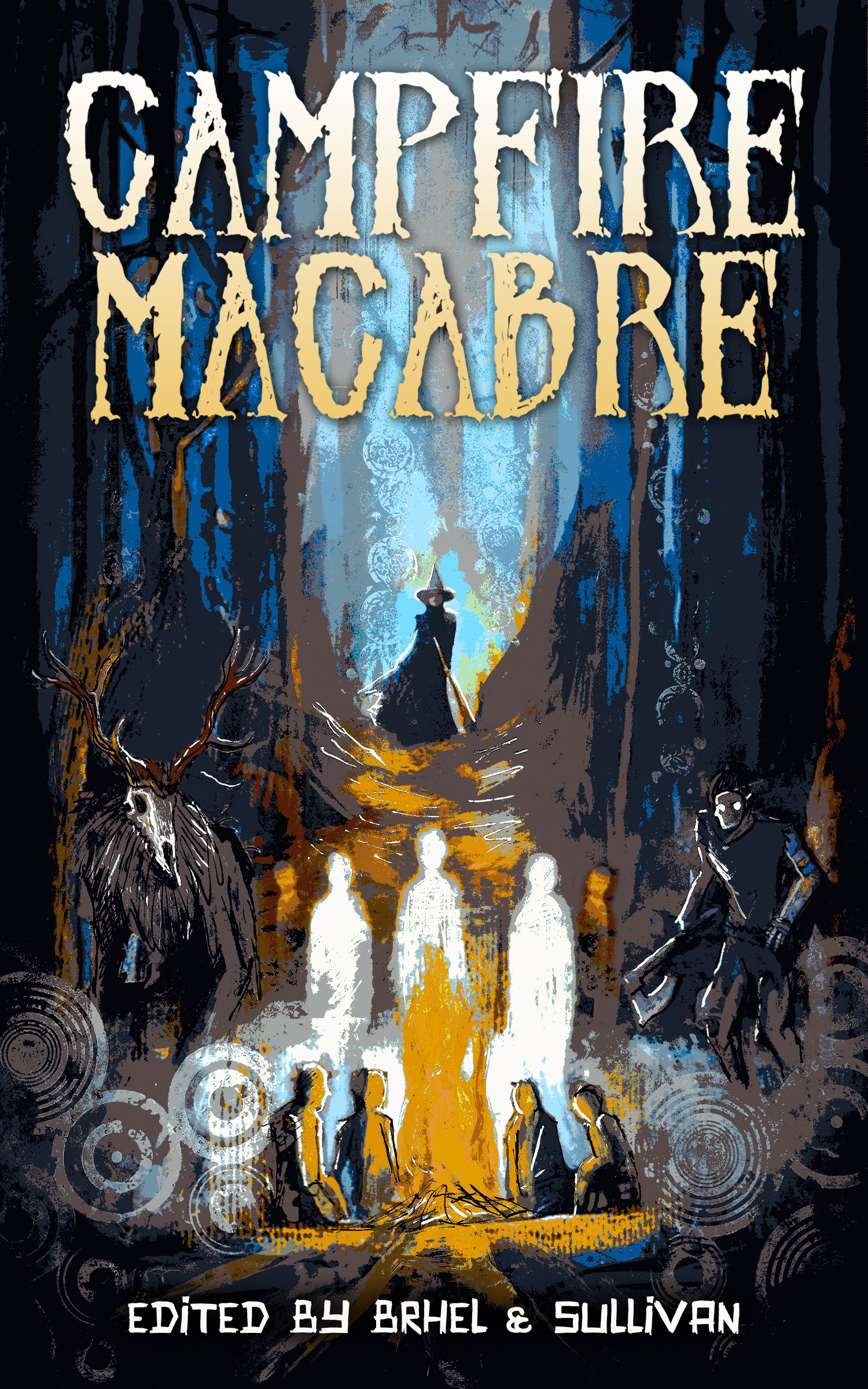
Campfire Macabre front art with text


Paperback and eBook Now Available Here!

50+ original flash horror tales organized by five themes: Spook Houses, Slashers, Witchcraft, Within the Woods, and Cemetery Chillers. A book perfect for time spent around the campfire or on a long car trip! Brand new pieces from award-winning storytellers and established authors.

Check out a detailed review of the book from Mother Horror here!

Here is the complete TOC:

“The Forever Awful House” Cynthia Pelayo

 Spook Houses

“Best Friends Forever” Priya Chand

“Making a Believer” Chad Lutzke

“RV” Mark Cowling

“Best House” Donyae Coles

“Sound Never Lasts” Corey Farrenkopf

“The Words in the House” R.K. Duncan

“The Annex” Lisa Short

“Cabin Fever” Sydney Richardson

“Ride Like the Devil” Jason Parent

“Keepers of the Light” Sonora Taylor

“Lullaby” Trevor Tolliver


Supernatural Slashers

“Final Girl” Derek Austin Johnson

“A Sleepwalker’s Hands” Corey Farrenkopf

“Scabby Abby” Lana Cooper

“So Many Teeth” Jon Gauthier

“The Crayfish God” Kevin Lucia

“All the Makings” Glen Krisch

“House of Summons” Yolanda Sfetsos

“Collateral Damage” John Lynch

“A Busy Season” Adam Godfrey

“The Sharp Edge of Midnight” Tim Waggoner


Witchcraft

“I Believe in Witches” Matthew Stott

“Bernard” Ky Huddleston

“The Art of Darkness” Regina Garza Mitchell

“The Girl in the Window” Patrick R. McDonough

“The Lake of Poppets” Jessica Ann York

“A Little Justice” Ali Seay

“Eye of Newt” Jessica McHugh

“Swallowing the Fire” V. Castro

“Manhunter” Eddie Generous

“My Evening with the Witch” Brandon Scott

“The Hag’s Gift” Villimey Mist


Within the Woods

“The Shimmer of Trees” Eric J. Guignard

“Blackjack” Kealan Patrick Burke

“Fruiting Bodies” Jude Reid

“Its Black and Beating Heart” Robert S. Wilson

“The Wishing Box” Michael Harris Cohen

“Boys and Girls Come Out to Play” Beverley Lee

“Dewdrops and Blood” Sara Tantlinger

“The Bird with the Clownish Plumage”

Hailey Piper

“heartwood” doungjai gam

“Instructions for the Broken Hearted Who

Venture into Devil’s Horn Woods”

Tiffany Michelle Brown

“Her Favorite Story” John Timm


Cemetery Chillers

“Silence Which Comforted Me” Eugie Foster

“Waking the Dead” Monique Youzwa

“The Intern” Michael J. Moore

“On Halloween Night” Janine Pipe

“Death Toll” Alex Ebenstein

“Midnight Snack” Angela Sylvaine

“The Grave Listeners” Andrew Cull

“I Would Have Rescued Them All” R.J. Joseph

“Hunger” S.H. Cooper

“Shattered World” Kenneth W. Cain

“Up from Under” Tyler Jones

“We Need Your Donations!” Elford Alley


Places We Fear to Tread

Uncategorized

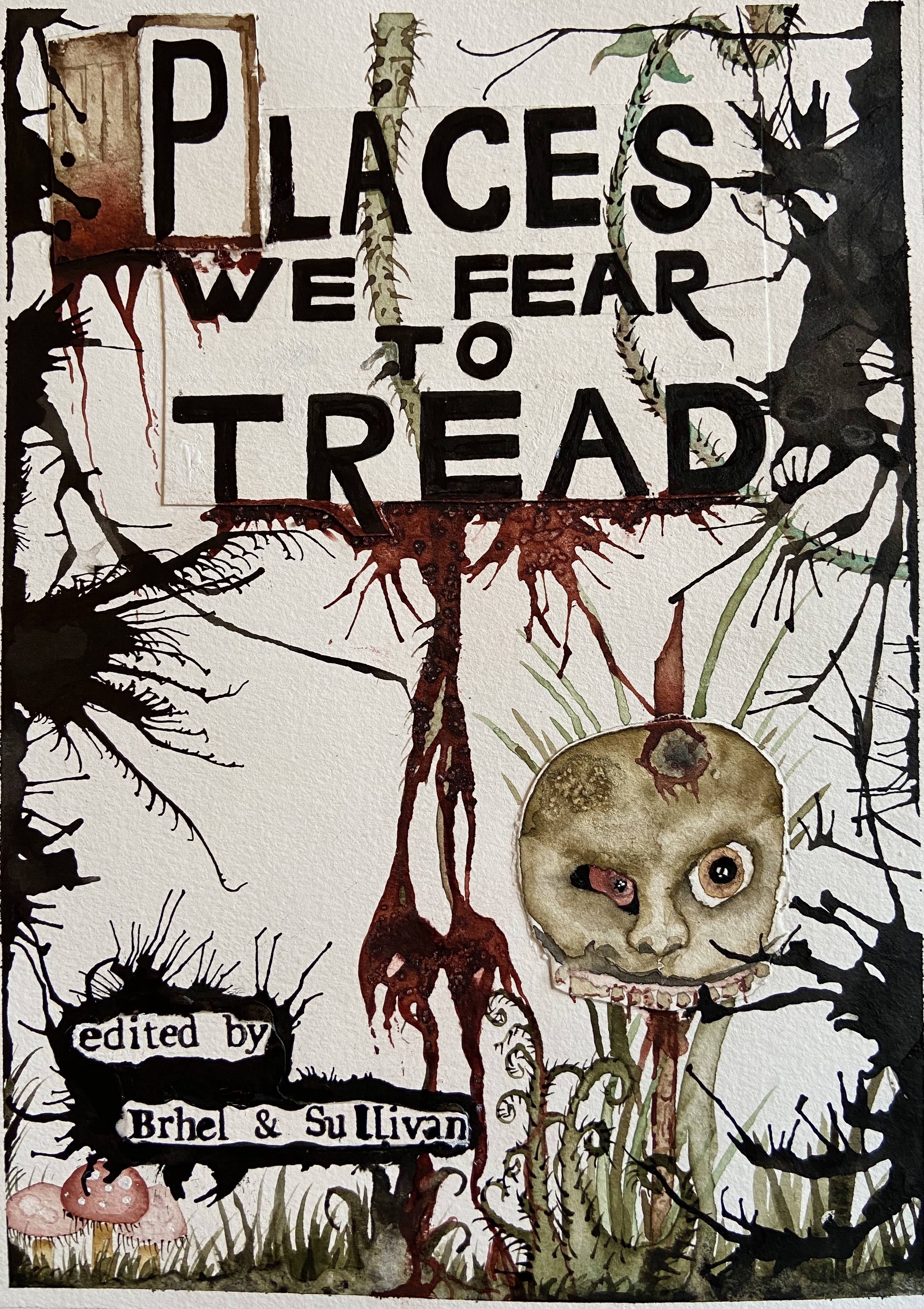
IMG_2031

Now Available in paperback and eBook!

26 authors, 26 locations, 347 pages, 100k+ words; original horror stories from many of the genre’s darkest minds. Nightmares imagined into real places; from Nigeria to Japan, North America to Australia. Locations the authors have inhabited and imbued with the sinister–hiking trails, haunted lakes, relics of faded industry, and even a Hawaiian volcano!

Is there a selkie who resides in the Wartrace Lake Dam, Tennessee?

Can you summon a godlike entity on the coast of Oregon?

There are many Crybaby Bridges, but which one belongs to author Gwendolyn Kiste?

Tales from the British Isles–of cursed beaches, remote manor houses, and plagued villages. Fresh takes on old legends, newly minted stories attached to interesting landmarks, and even personal hauntings (which will never be pinned on Google Maps.)

Featuring:

“Here in this Place is a Means to an End” Chad Lutzke

“The Storm on Kinzua Bridge” Sara Tantlinger

“The Bone Man of Sanatorium Lake” Andrew Cull

“Lost Girls Don’t Cry” Gwendolyn Kiste

“Laughter in the Night” Sonora Taylor

“This is Home” Laurel Hightower

“Bussell’s Bog” Cameron Ulam

“The Deer God” Wendy N. Wagner

“Ho‘okaulike” Michelle Mellon

“The Hound of Brackettville” Bev Vincent

“Cold-Blooded Old Times” J. A. W. McCarthy

“The Swim Instructor” Eddie Generous

“The Wrong Turn” Angela Sylvaine

“Bring Out Your Dead” Beverley Lee

“Cellophane” Michael J. Moore

“The Sad Museum” Alex Payne

“Hopscotch For Keeps” Hailey Piper

“Bare Bones” Jude Reid

“The Wet Dream” Jill Girardi

“Devil’s Elbow” C. W. Briar

“Puppet Show” Julia August

“Teke Teke Teke” Michael David Wilson

“Black Fatima” Muhammed Awal Ahmed

“The Sand Knows” Zach Shephard

“One Badly Hit Ball” John Leahy

“Women of the Mere” Jessica Ann York

Click here to purchase the eBook!

Click here to purchase the paperback!

2020 Anthology Submission Guidelines

Uncategorized

***Submissions are closed***


We’re currently looking for previously unpublished horror stories, 3-6k words, for a location-themed anthology to be released September 2020.

The theme is: local lore or location-based oddities. Write something dark into a setting you’ve experienced — it could be a place you’ve lived, or even just somewhere you’ve visited on a vacation. Is there a landmark in your town that you can write a nightmare into? Have you ever legend tripped somewhere and thought, well, that cave, mausoleum, torture tree was neat, but I wish there was more to the story?

If so, you’re welcome to send us (1) submission at cemeterygatesmedia@gmail.com in DOC or RTF form. Deadline August 1, 2020. However, we’ll begin reading and accepting stories well before August, so the window may close earlier.

Paying .05/word per accepted submission for First Rights Publishing, and asking that you don’t republish your story until August 1, 2021.

In our fifth year of publishing we’re looking to expand our reach into 21st Century folklore, urban legends, and the space between creepypasta and literary horror. We will favor stories that name real locations one can visit in person. Our tales often give brief histories for locations. For examples of what we’re looking for, see Other Voices, Other Tombs; At the Cemetery Gates: Year One and Volume 2; or Corpse Cold: New American Folklore

-Joe Sullivan, Editor

Grief is a False God

Uncategorized

baal_profile_corrected

Elijah Keene is trying to get by after the untimely passing of his beloved wife Jess. Overwhelmed with the responsibility of being a single father, failing as a farmer, even coming up short as a son — he struggles to distance himself from his grief. Elijah soon discovers that an unspeakable horror has arisen from the land which his family has cultivated for generations. An entity of which his own father and deceased mother may have been all too aware. GRIEF IS A FALSE GOD is a chilling novelette by Gemma Amor, featuring vibrant illustrations from Anibal Santos.

You can purchase the 8 x 10 paperback here

or get the gorgeous 8.5 x 11 hardcover edition here

jezebel_with_death

Other Voices, Other Tombs

Uncategorized

OtherTombsOtherVoices_Cover_Front

OTHER VOICES, OTHER TOMBS is an anthology packed with unsettling stories from the finest independent authors in the horror genre. This anthology runs the gamut of styles, including everything from literary horror to creepypasta. Ania Ahlborn, Kealan Patrick Burke, Michael Wehunt, Mercedes Yardley, and Gemma Files are widely considered some of the best authors working in dark fiction right now. Also included are stories from NoSleep Podcast legends: Gemma Amor, JD McGregor, and Michael Whitehouse.

Now available in paperback and eBook!

This book is a general horror anthology, but there is a light summer theme. Kealan Patrick Burke leads off the book with a throwback tale that takes place in the summer of 1989. Two boys uncover a terrifying entity while exploring an abandoned swimming pool in “The Second Hand”.

“Uncomfortable Gods” by Michael Wehunt takes place entirely on the grounds of the sleazy 40 Winks Comfort Lodge. Husband and wife, Den and Karen, are sidetracked on their way to the beach by Den’s horrible toothache. Den leaves Karen in the motel room for longer and longer periods to deal with his toothache, eventually Karen is forced to uncover what is leading Den astray. A psychological tale with wonderfully gruesome imagery. Worth multiple reads!

Gemma Amor leaves it all on the hot tarmac in “Three Lanes Deep”. A long, sweaty traffic jam forces Lucy to leave her car in search of a place to relieve herself. She encounters friendly strangers who offer her a cold drink and a place to go to the bathroom–then all hell breaks loose.

“The Switch” by Cameron Chaney takes place at a summer camp. Fans of the Lindsay Lohan star vehicle The Parent Trap should appreciate Chaney’s light homage, and his heinous twist.

Astute readers will certainly be sweating Kevin Lucia’s oppressive “A Circle that Ever Returneth”. A man takes a job beneath his perceived status in life at a bottle and can redemption center, and soon realizes he’s being ground down to nothing by the repetitive tasks and mind numbing interactions with his co-workers. This story is a proper lost episode of The Twilight Zone. Jordan Peele, take note.

There are other non-seasonal themes that run through the book like Ania Ahlborn’s take on the difficulties of early motherhood in “The Governess”, featuring one of our favorite storytelling devices, a malfunctioning baby monitor; Mercedes Yardley’s “Urban Moon” which deals with a mythological reinterpretation of violence against women and a major problem with social media.

A woman must cope with the emotional difficulties of her occupation as an end of life nurse for a young girl in a hospice center, in Garza and Lason’s “Fly away, little fledgling.”

There are many more fantastic stories from incredible authors like Gemma Files’ apocalyptic “This is How it Goes”, Mike Duran’s folk horror, witchcraft infused “Bury Me in the Garden”, poor choices made by a woman on a snowy stretch of highway in Upstate New York “Alone in the Dark” by J.D. McGregor, Michael Whitehouse’s government cover-up on a remote Scottish isle in “Forget the Burning Isle”, C.W. Briar’s horrific children’s POV regarding bad behavior in “Can We Keep Him?”, and Caytlyn Brooke’s take on psychotic teenage angst during prom season, with her tale “The Red Rose”.

Pick up a copy now and support independent writing and publishing!

eBook or in paperback

Read the First Chapter of ‘The Thrumming Stone’

books

CANTICLE ONE


Even by lax cultural standards of the 1990s, my sister and I were probably too old to be rocketing down the hill at Virginia Ave Park. Jenny was 16 and I had just turned 14, but an impromptu afternoon of sledding freshly fallen snow was one of the last bastions of pure, unadulterated joy in our increasingly complicated lives. We were in the 8th and 10th grade at Lestershire High, coming of age during the peak of MTV’s generational influence—thankfully, we were still a couple years away from voluntarily tethering our social lives to AOL and its Instant Messenger. And even though we were glued to MTV and reruns of 90210, our worldview was still largely shaped by our family, friends, teachers, and small town.

Our passage into adolescence had been a rocky one. Our mother, Helen, had only been gone for a couple years, but her eulogy and burial still felt recent. Jenny and I were young enough that her absence was omnipresent in our daily lives—an empty seat at recitals, a dearth of home-cooked meals, missed rides to and from sporting events. Yet, there were moments between the two of us, here and there, which recalled the blissful innocence and wide-eyed optimism that had defined our childhood. We could still enjoy the holidays and looked forward to seeing our extended family; there were birthday parties, presents we hoped to receive, sleepovers and dances that we planned for months in advance.

Our idyllic, storybook village had not yet been laid to waste by layoffs and plant closings. Main Street still felt like the center of town. Everyone I knew had been at the Christmas parade, only weeks prior. It seems alien now, but there were two roller skating rinks, at which I had recently attended birthday parties; and this was the same year that I had started high school.

I was a nostalgic kid. Always looking to recreate monumental moments from my past, even though I was still just that—a kid who’d only just found his postpubescent voice. I was taken aback when Jenny brought up sledding. We only lived a few streets away from the best sledding hill in the county, and it had been such a centerpiece of our childhood winters.

We’d dug out my dad’s old wood runner sleigh and a beat plastic sled that most people would have tossed after a season. A layer of fresh, powder snow had fallen that late-December morning, just right for speedy trips down the slick slope. The hill at Virginia Ave was already a canvas of intersecting lines and boot prints, but the park was largely empty when we got there. There were a few stragglers who were trying to erect a small snow ramp, but it kept flattening each time they hit it. We watched them while we made a few runs of our own, until they finally gave up and went home, and the park was ours.

“Maybe we should try down there,” said Jenny, pointing to a smaller slope at the northern end of the park, running alongside one of the softball fields.

I just shook my head and laughed. Jenny always had to take an innocent outing and find a way to make it a little more dangerous, or at least involve some sort of trespassing. I had gotten scraped up by too many ledges, dogs, and thorn bushes to follow her blindly into another misadventure.

“Why not?” asked Jenny.

“It just goes down to the crick.”

“C’mon, dude. I bet it’s steeper.”

“What if we hit the ice and fall in?”

Jenny snickered. “It’s frozen over and the water’s probably only ankle-deep, anyway.” She began toward the other hill, dragging our dad’s antique sled behind her, ignoring my warning. She didn’t even look back to see if I’d follow. “If you fall in, I’ll call Captain Kirk and you can be on Rescue 911.”

I can’t lie and say I didn’t hesitate, but ultimately, by age 14 I had largely grown tired of playing the wimpy younger brother—especially since I now towered over her. I picked up my crappy, red sled and jogged to catch up.

This second hill was mostly forested, but there was a broad path that led from the edge of the softball field to the bank of the frosted-over creek—it certainly looked like it would be a fun, fast ride.

“There’s no way that you won’t go onto the ice, Jenny.”

“There’s nothing to worry about,” she said. “I’m practically an Olympic-caliber sledder. I’ll just turn before I hit the ice.”

“Just be careful, okay?”

“Sure.”

She set the sleigh at the edge of the hill and took a seat. But instead of pushing off down the steep embankment, she hesitated and looked back at me like she had been struck with a brilliant idea.

“You get on the back,” she said. “More weight is better with these old sleds.”

“No. You do it first.”

“Don’t be a wuss, Joey.”

I sighed and got on the back of the sled. I knew she’d torment me for days if I didn’t comply. She was great at telling everyone we knew about how much of a little bitch I was. I took some comfort in the fact that if we crashed, I’d likely land on top of her.

Jenny grabbed the rope and placed her feet on the steering board. “Ready?”

“No.” I just assumed that with her at the helm things wouldn’t end well.

“3….2….1!”

We shot off from our position and down the unmarred path. As we glided down the hill, we carved out two deep tracks in the snow; it really is amazing how fast runner sleighs can go. The sled picked up speed as we made our quick descent, and Jenny screeched with glee. Despite my initial trepidation, I couldn’t help but crack a smile.

The slight bumps on the way gave us brief rushes of weightlessness, and a large stone or root sent us airborne. We only got a few inches off the ground, but tufts of snow shot up in our faces when we landed, and Jenny had to redirect us away from the trees that lined the left side of the path.

I knew that we were traveling too fast for her to steer us hard in any direction, and I think she recognized it soon after—though I now suspect that it had always been her intention to take us onto the ice. But she made no move to halt or alter our progress as we passed over the creek, the runners hissing beneath us as we traversed the ice. I suspect we even picked up speed over the twenty-or-so-yard-width of Little Choconut Creek, because we were propelled into the woods on the other side, narrowly avoiding a few gnarled maples and elms before slowing among a field of glacial erratics.

Jenny fell back against me and we rolled off the sled as it came to a halt. I yelped as I landed elbow to rock. “Get off!”

She sat up gingerly and shook some snow from her scarf. “Holy crap. That was—”

We were both startled by a loud groaning and then a series of pops from the ice behind us.

“See, I told you we wouldn’t break through the ice,” said Jenny, grinning. We got up and took a few steps back toward the creek to have a look at the source of the noise.

Our sled had evidently cut a section of the ice like a knife, because there was now a large gap which exposed the running water below.

C’mon! How are we supposed to get back across now?” I instantly regretted not having the guts to just tell her no.

“Relax. We’re still in Lestershire, bro. We’ll just head this way until we get to Airport Road,” said Jenny, pointing toward the rocky clearing where the sled had come to a stop.

“Yeah, I guess,” I said. “I think I can hear a truck nearby.”

We wandered the forest, trying to determine the direction of what sounded like an idling engine. We had never been in that part of the park before and, though I knew our house was still only a ten-minute walk, it suddenly felt like we were miles from civilization, shut off from the world. It was exhilarating—that adolescent call to adventure and exploration—we didn’t get out of Lestershire all that often.

“Some of these rocks are pretty cool,” I said. The landscape was unique, like something you’d find in the Catskills or Adirondacks, not smack in the middle of our little village. “I’ve never seen anything like this around here.”

“I think it’s this way,” said Jenny, ignoring my comment. She started up a steep incline.

“Wait, Jenny, check this out,” I said, approaching one of the larger stones in the field. It was between four and five feet tall but wasn’t as round as the others; it reminded me of one of the smaller monoliths I’d seen in books about Stonehenge and other megalithic sites—I’d been obsessed with Stonehenge since elementary school. When I got closer to the stone, I first assumed that it was covered in faded graffiti but was pleasantly surprised to find out that the lines were carved into the rock.

“What?” She came back down but took her time in doing so.

“It looks like pictures, but like it’s some sort of writing…”

“On the boulder?”

I looked at the squiggles and characters from different angles, tried to make some sense out of them. There were animals, people in conflict, indiscernible swirls that seemed to say something that I couldn’t quite grasp. “It’s like hieroglyphics, I guess.”

Jenny came up beside me and examined the markings. “Yeah, wow… They’re not hieroglyphics, though. They’re called petroglyphs.”

“What’s that mean?” I asked.

“It just means someone made inscriptions on the stones. Probably Iroquois.”

“Where’d you hear that?” I asked.

“Mr. Verity,” said Jenny, referring to one of our school’s more eccentric teachers. He had been her history teacher and now he was mine.

We dusted off as much snow as we could around the rock to get a better look at the carvings.


img_1723


“So, you think this is really old?” I asked, tracing some of the intentional lines with my finger.

When she didn’t respond, I leaned over to see what was occupying her attention, and was spooked by her now-frozen, emotionless expression. “Jenny?”

But I didn’t have time to wait for a response, as I began to feel a vibration through my gloves, emanating from the monolith itself. A sudden wave of nausea swept over me and I felt a sickening fear of losing consciousness—the sort of stimulation where in the midst of the experience, you come to the conclusion that ‘this is what it’s like to die.’ My racing thoughts only subsided when my vision narrowed to the point where I blacked out. What I experienced then is still difficult to describe. Because, in essence, I merely collapsed next to a rock in a snowy forest. I knew it to be all the same symptoms of passing out. I’d fainted in junior high shop class, during a grisly discussion of bandsaw and drill accidents; I knew the feeling well. But this experience had one noticeable difference, in that, between my loss of consciousness and the cloudy recovery of my faculties, a window into some sort of special knowledge was briefly cracked open and then swiftly slammed shut.

I sat and stared at my black snow boots for some time after coming to, trying to recall the fleeting image. It was an identical loss to the times I’d awoken from a nightmare but had no recollection of the terror I’d just experienced. For some reason, I felt like my boot was the only tenuous connection I had to the vision. My boot. A soldier’s black boot. Soldiers walking through the desert during the Gulf War, in their hot, heavy gas masks.


img_1722


“Joey?” came my sister’s voice, shakily.

I looked up, immediately losing my train of thought. She was sitting too—with this pale, dazed expression that I’d only seen on bite victims in vampire movies.

“I don’t hear the humming anymore,” she said. Neither did I.

We both silently got up and headed up the incline, eventually finding our way through the woods and reaching the street that joined Airport Road and Virginia Ave. We didn’t speak of our encounter with the vibrating, thrumming stone on our walk home either. I could tell that she was drained, though I didn’t dare mention my vision, or ask her whether she had experienced anything uncanny at the monolith.

I think we both understood that the other had undergone some sort of trauma, and that the best course of action was to just leave it be.

 

LEARN MORE ABOUT THE THRUMMING STONE

ORDER YOUR COPY THROUGH AMAZON!

The Thrumming Stone

Uncategorized

Thrumming Stone front cover

Could you really prevent a massive disaster if you knew it was coming?

Would your friends and family even believe you?

What if you were an average high school freshman, and seemingly the only person who could save your town from utter destruction?

THE THRUMMING STONE is a sci-fi horror novella (with interior illustrations by Ryan Sheffield) about teen siblings who discover a nightmare-inducing monolith in the woods near their home. Once unleashed, premonitions and apocalyptic visions spread throughout their high school like a plague.

Drawing 9 Proof

Drawn by artist Ryan Sheffield

Read the first chapter for free!

The illustrated paperback version is now available here!

Or check out the eBook on Amazon here!