Illustrated Horror Stories for Kids: A ‘Scary Stories to Tell in the Dark’ Lineage

Uncategorized

ss1

The Thing at the Foot of the Bed and Other Scary Tales — Maria Leach, illustrated by Kurt Werth (1959)

This book was a touchstone for Alvin Schwartz in writing his Scary Stories to Tell in the Dark series. It features many of the same urban legends he would go on to include in his booksspecifically, a cemetery dare, ghostly hitchhikers, body parts falling down chimneys, departed souls seeking lost possessions, and even a killer in the back seat.

ss2

Monster Tales — edited by Roger Elwood, illustrated by Franz Altschuler (1973)

Monster Tales and its 1974 sequel Horror Tales read more like The Hardy Boys meet The Brothers Grimm. Most curiously, the introduction to this book was written by Robert Bloch (best known for writing Psycho) and it certainly feels like it could have been the inspiration for each of Alvin Schwartz’s introductions in the Scary Stories series. “Precious Bodily Fluids” and “The Vrolak” are fun stories with fantastic illustrations.

ss4

Ghosts — Seymour Simon, illustrated by Stephen Gammell (1976)

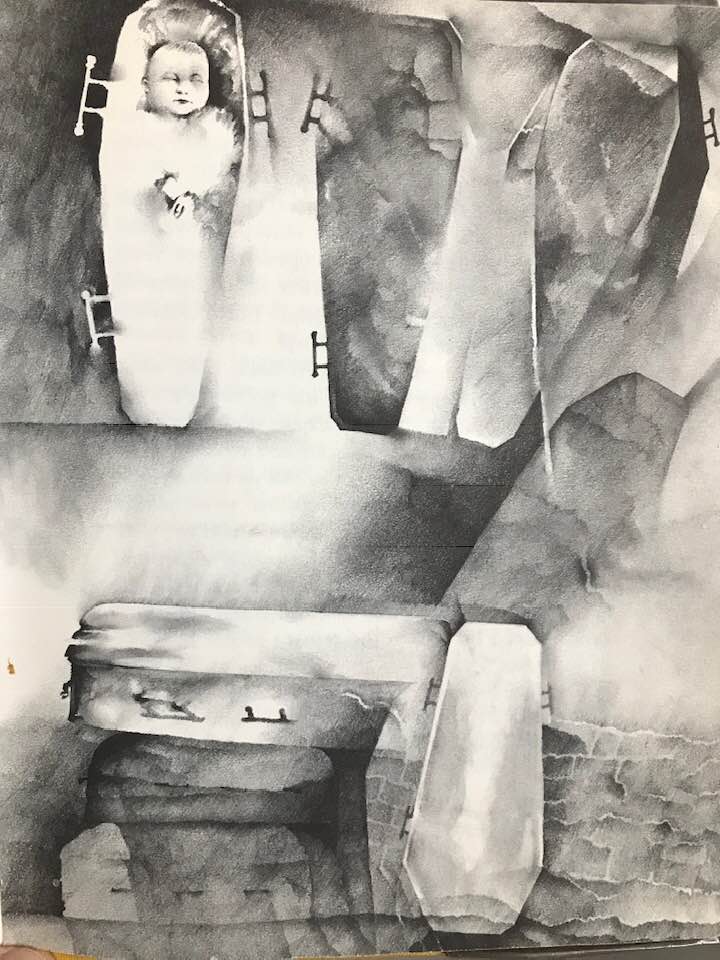
This book has had a long shelf life. It is one of the Eerie Series — nonfiction books describing historical encounters with ghosts, monsters, and aliens. I remember it fondly in my elementary school library in the early ’90s. My boys regularly borrow it from our local library, though the newest version is missing Gammell’s drawings. I guess creepy babies in coffins is a harder sell in the 21st Century.

ss5

Scary Stories to Tell in the Dark — Alvin Schwartz, illustrated by Stephen Gammell (1981)

IMG_0969

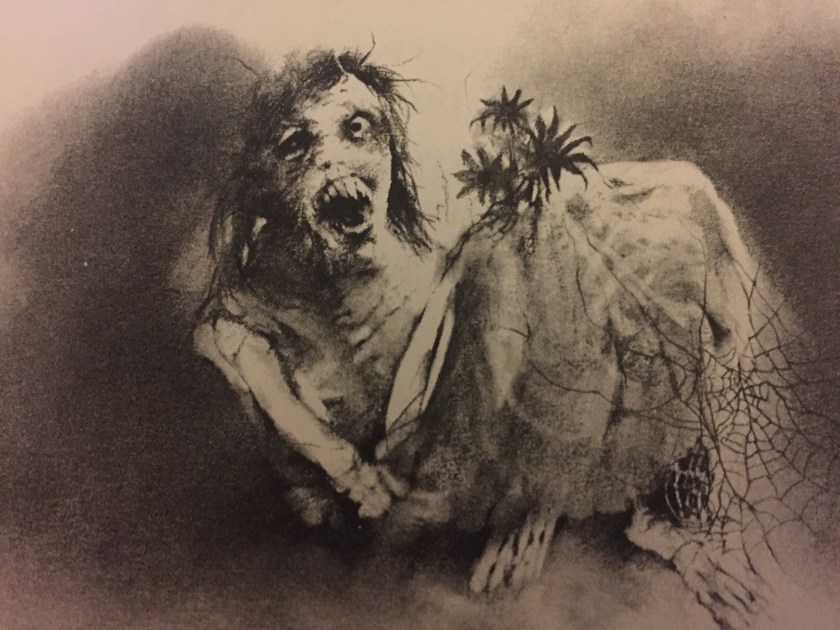
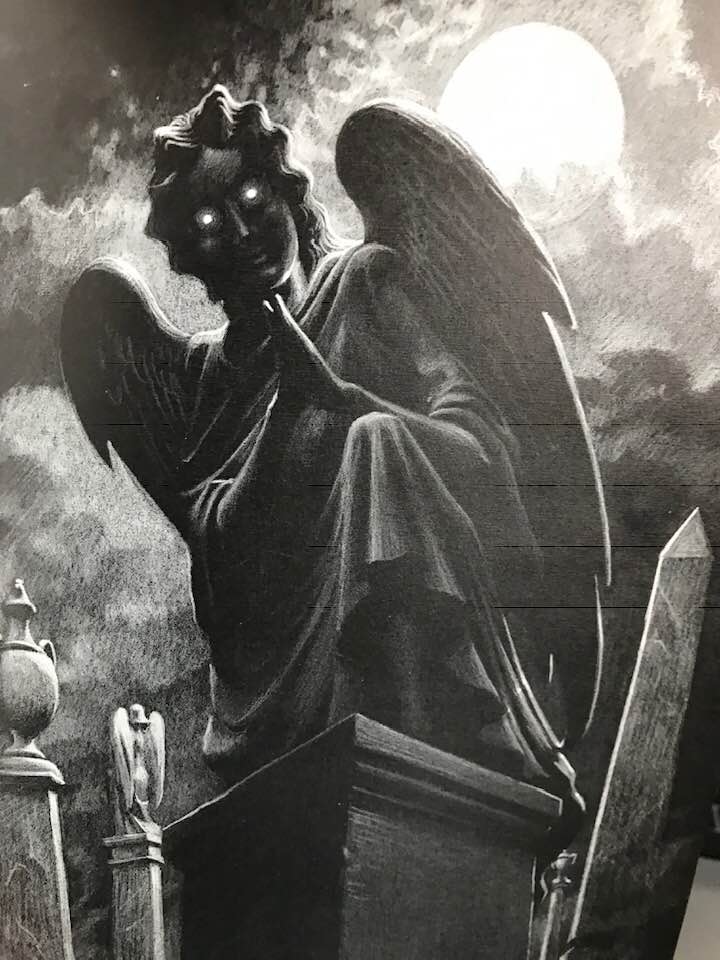
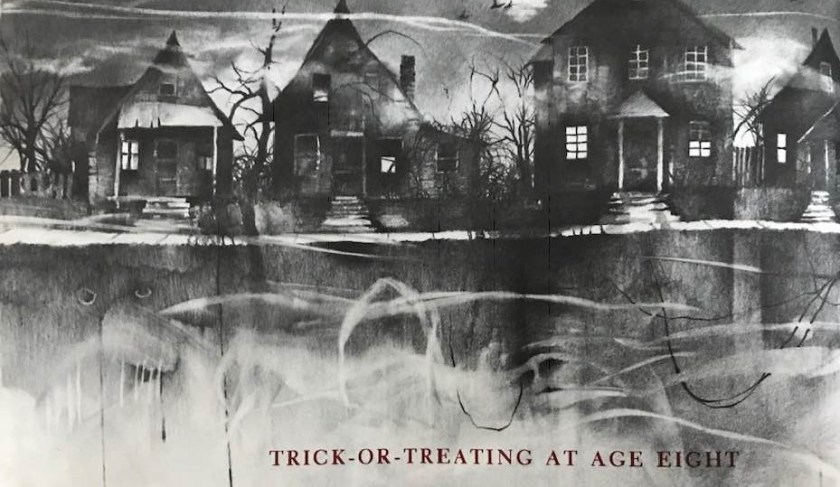
Schwartz is known as a modern folklore populist for good reason. Since Maria Leach’s The Thing at the Foot of the Bed, no other author had attempted to encourage storytelling in kids. The tales are short and memorable, and Schwartz gives tips on how the stories should be performed. I’m glad I heard these stories from a friend (in a dark, dark closet) before reading them, or seeing Gammell’s unbelievable illustrations. As a kid, you get caught up in the illustrations because they’re so garish, so unlike anything you’ve ever seen. You miss out on the full experience if you never hear the stories performed by someone your own age.

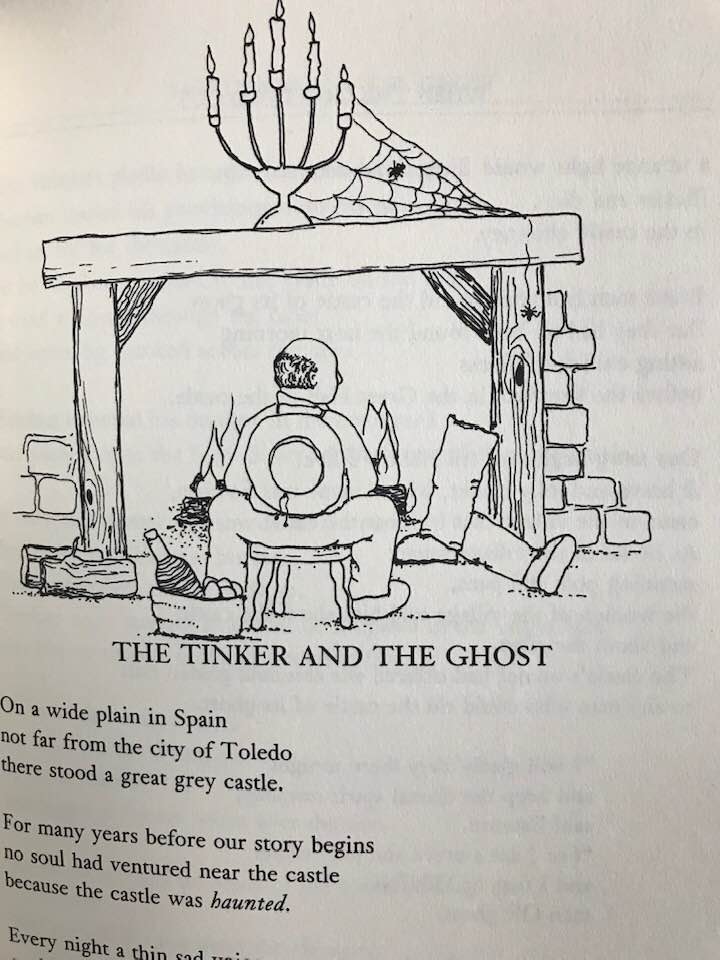
Esteban and the Ghost — Sibyl Hancock, illustrated by Dirk Zimmer (1983)

ss6

The artwork will seem familiar to fans of Alvin Schwartz. The story should too. It’s about a man who was dared to stay the night in a haunted castle. Everyone else who took the challenge died of fright. Esteban begins hearing noises coming from the chimney, body parts tumble out of the fireplace, then he finally encounters the ghost…

In a Dark, Dark Room/More Scary Stories to Tell in the Dark — Alvin Schwartz, Illustrated by Dirk Zimmer/Stephen Gammell (1984)

Most kids first encountered Alvin Schwartz through his I Can Read entry: In a Dark, Dark Room and Other Scary Stories. Tales like “The Green Ribbon” and “The Teeth” were memorable and frightening for a young reader, and could’ve easily been in the second installment in the Scary Stories series.

ss15

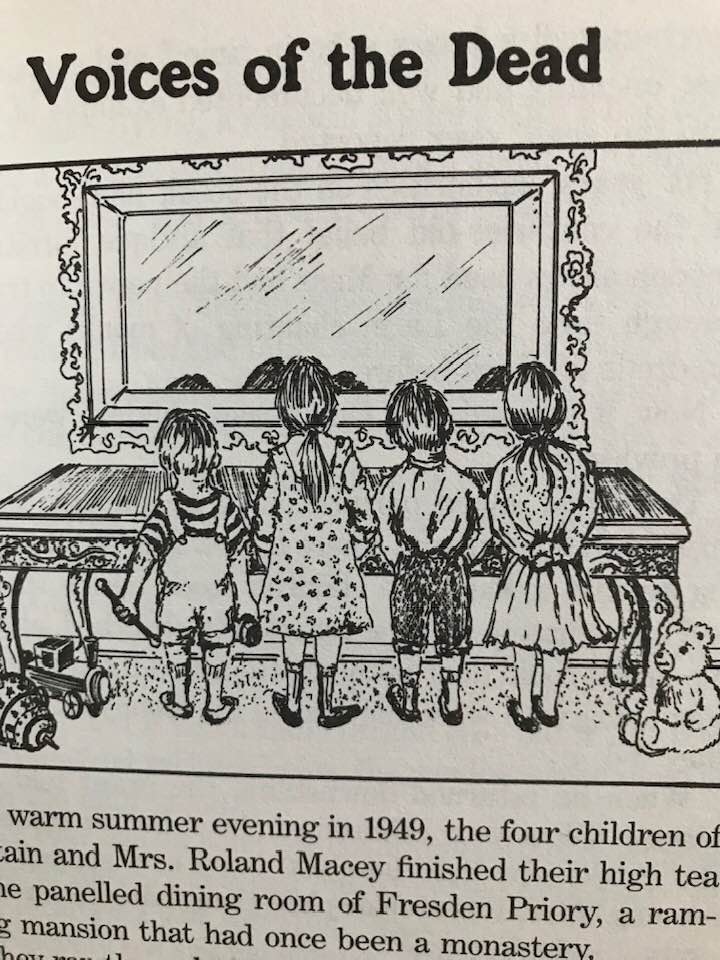
More Scary Stories ups the ante by instructing children in the practice of spirit conjuring with “A Ghost in the Mirror.” As long as there are mirrors in bathrooms, Bloody Mary will be with us for the rest of our lives.

img_0970

America’s Very Own Ghosts — Daniel Cohen, illustrated by Alix Berenzy (1985)

There are some American ghosts present in this collection of tales, such as Lincoln, Edison, and Houdini. But its strengths lie within its location haunts like “The Bell Witch” of Tennessee, and “Black Aggie” of Maryland.

ss7

When the Lights Go Out: 20 Scary Tales to Tell — Margaret Read MacDonald, illustrations by Roxane Murphy (1988)

This is actually a sequel of sorts to MacDonald’s Twenty Tellable Tales (1986). Both books are clearly inspired by Shel Silverstein’s poetry books and the Scary Stories series, but aren’t meant to be frightening, and focus on the sillier elements of storytelling.

ss8

Halloween Poems — selected by Myra Cohn Livingston, illustrated by Stephen Gammell (1989)

In the midst of his Scary Stories tenure, Gammell illustrated the heck out of 18 Halloween inspired poems. The poetry is forgettable, and it almost seems a waste of Gammell’s talent for the macabre, which he certainly delivers.

ss9

If You Want to Scare YourselfAngela Sommer-Bodenburg, illustrated by Helga Spiess (1989)

ss10

This book’s a hidden gem. Five original tales, originally published in German in 1984. It was a Scholastic release, but quickly got drowned out by the glut of elementaryage horror releases following the success of the Scary Stories and Fear Street books.

World’s Strangest “True” Ghost Stories — John Macklin, illustrated by Elise Chanowitz (1990)

The text is from Macklin’s 1967 release Strange and Uncanny, and the stories are ‘true’ in the sense that America’s Very Own Ghosts is ‘true.’ This version of the book is illustrated and did well enough to warrant a sequel in 1994. There are some familiar topics, such as the vanishing hitchhiker/lady in the white, a murderous car, and a phantom pirate. But the text was written long before the Scary Stories craze and there are some genuine American legends that I promise you’ve never heard before.

ss11

Scary Stories 3 — Alvin Schwartz, illustrated by Stephen Gammell (1991)

The stories are longer, and Schwartz is at his most gruesome (see “Harold” and “The Red Spot.”) No longer are there instructions for performing the tales. The following year (only months after Schwartz’s death) would see the first Goosebumps release, which would change the face of elementary school reading — favoring chapter books, no illustrations, toneddown gore and much less violence. It’s interesting to think about what the next iteration of Scary Stories might have looked like. Would Schwartz have attempted a kid’s horror novel? R.L. Stine is a fan of the Scary Stories series. I can only imagine how much fun a hybrid Goosebumps/Scary Stories to Tell in the Dark style series might have looked like — and certainly illustrated by Stephen Gammell.

IMG_0963

Scary Stories 3 was Gammell’s last iteration of his most beloved drawing style.

Grimm’s Grimmest — Arranged by Maria Tatar, illustrated by Tracy Arah Dockray (1997)

A solid collection of the goriest of Grimm’s fairy tales. The interior illustrations and choice of material remind me most of Elwood’s Monster Tales, while Professor Tatar offers a more interesting taste of classic folklore than many of her predecessors.

ss12

Nightmare Soup — Jake Tri, illustrated by Andy Sciazko (2016)

ss13

25 years passed before there was an illustrated collection of spook stories that even came close to the style of Scary Stories to Tell in the Dark. Which might speak more to the reach and influence of the Goosebumps and Harry Potter franchises. Nightmare Soup and its sequel, Nightmare Soup 2: The Second Helping, hit the tone and style of Schwartz and Gammell wonderfully. The stories have enough edge to keep 10- to 12-year-olds interested, without the confusing depth or vulgarity of contemporary horror and creepypasta. There are many illustrated books of horror stories that have come out following Tri and Sciazko’s first publication, but none are as accessible to that 10- to 12-year-old audience as the Nightmare Soup series.

Joe Sullivan is co-author of Corpse Cold: New American Folklore and Resurrection High.

An Indie Publisher’s Guide to Launching and Supporting a Successful Kickstarter Campaign

Uncategorized

We’ve only run one successful Kickstarter campaign as a publisher, so most of this will entail what worked for Cemetery Gates Media in raising $29k last October for Corpse Cold. But if you’re an indie publisher in the horror/sci-fi/fantasy genres, I think our lessons learned will most readily apply to your crowdfunding project.

The following is a series of questions one might ask themselves before launching any Kickstarter, followed by my answers as related to launching a book.

Do I have a unique product?

The most successful books are illustrated, representing visual arts as their major selling point. This coffee table book on Norse Mythology is a gorgeous collectible. It raised 75k last year!

Are you filling a niche in demand? Handcrafted spell books and books about witches tend to do well because there is a strong online community of Wiccans and Neopagans. Warning: niche impostors won’t attract the same interest as someone with a preexisting presence in the genre, community, or lifestyle.

Launching a single-author collection is a difficult task, even if it’s illustrated. Which is why so many books launched are group anthologies. Everyone needs to first identify their crowd, the characteristics of who might support their project before running a campaign. A group anthology often attracts a crowd by including authors with the desired characteristics of their targeted crowd i.e. authors who’ve been featured in other anthologies in their desired genre, authors who’ve had success on other platforms like Reddit, Tumblr, YouTube, etc.

Can I expect to reach consumers outside of my family, friends, current social media reach?

Establishing a brand that can be promoted is so much more important than establishing your author ‘name brand.’ You need to have a finished product to show, a back catalog of work, even if it’s only a few paid anthology credits. You need new eyes to be able to trust that your work is already well-regarded by an audience, any audience. Launching a Kickstarter to gain your first exposure, to build your first brand, is incredibly difficult, and likely an insurmountable feat in the publishing world.

If you can’t dip into the audiences where your work has had some traction, then you’re going to have to rely too heavily on Kickstarter itself as a promotional tool. This is the death knell for most failed projects on Kickstarter. The Kickstarter algorithm pushes traffic from within its site to your campaign on par with the traffic generated by you, from off the site. If you’re successful in generating traffic to your campaign page, Kickstarter will stand shoulder to shoulder with you in driving pledges.

Do I have to RISK money on advertising?

Even if you have tens of thousands of followers on various social media platforms, have an existing marketing pipeline for selling books, you’ll need to spend hundreds of dollars and be willing to risk losing that money. There’s an incredibly common misconception that you can really start to promote a Kickstarter campaign after its been funded — when the marketing is already paid for.

If you don’t hit half of your goal within the first two weeks of launching, your project might not get funded. Projects tend to lag ¾ of the way through. There will be days that you remain flat or even lose money from backers withdrawing their support. The most exciting times for a campaign are at its launch and conclusion. If you fund your project early, you can count on the interest of latecomers, watchers, fence riders, to propel your funding in the final week.

How much should I spend on advertising?

You should aim to hit 10k eyeballs a day for the first week using a static image with your brief message. Facebook is still the most efficient way for small budget publishers to generate traffic to a Kickstarter page. Rates have increased, but you should still be able to target genre readers for $40-60/day, or ~$350 for the first week. I think we spent $1400 for our 30 day campaign on FB alone.

You have one shot at capturing someone’s attention with your image as they scroll by. Use little to no text in an image, using the book cover is fine, if it’s a great cover, but you can get creative with the image you choose. The ad text needs to be brief. What brand are you selling and why should someone click your link? The link can go right to the campaign page, but it’s not a bad idea to have a landing page to continue the argument for why someone should back your project. The project landing page is your full sale for what you’re doing and should be promoted in your video and on your Kickstarter page.

We spent a small amount on Instagram, Twitter, Reddit, but they were largely inefficient for generating traffic. We weren’t able to get any deals done for promotion by social media influencers or YouTube personalities during our campaign. However, the micro-influencers were key in promoting our project on social media. Once you hit your goal you become a news piece for your genre and then it’s incredibly easy getting people to work with you in getting your message out.

Should I promote my campaign video?

Yes, and no. You shouldn’t spend money on promoting your video. It’s unlikely that it’ll be a viral sensation even if it’s a good/funny/creepy/emotional professional production. You want people to go to your campaign page to watch your video to garner information about why they should pledge.

You should promote the sharing of your video with press releases, through your existing network of contacts. New eyes aren’t going to watch any video for more than ten seconds as they scroll through their feeds.

What does a good campaign page look like?

A few images associated with your work. A few paragraphs summing up the message of the video and some additional information from your web page, including a link to your web page which should have at least one full story for a potential backer to sample. Don’t include anything about stretch goals until you hit your stretch goal! It’s clutter.

If you’re promoting a book the reward tiers shouldn’t be all that complicated.

Digital

Paperback

Hardcover

Bundle -offer things associated with your genre, an audio version, things readers might appreciate.

Special Version -additional material, not just rejected material.

Ultra Tier -you might offer your time, mentorship, handmade items.

People get hung up on creating wacky reward tiers, largely for their own amusement; or in trying to convey what might happen if funding is successful early on. You should be offering a boutique experience as a publisher. You need to convey the idea that you are putting out this limited product for, and only because of, your backers, and not because you’re using Kickstarter to jump-start your writing/publishing career.

If you’re launching a campaign from the US, include the cost of shipping in the cost of the book! International shipping will cost $15-35. We purposely set our international shipping at a flat “deal” rate to generate more international buys, because we included excess cost of a couple dollars in our domestic shipping calculation.

How much money should I ask for?

The minimum amount that makes the project work for you. Assuming $350 dollars is your minimum advertising fee, your goal should be 10x your risk, before taking into account other costs.

Shipping to 100 unique buyers isn’t a big deal, and isn’t that costly if you’re in the US and shipping to mostly American backers. Shipping to 500+, when you have closer to 100 international buyers, is labor intensive. The last I checked, you could ship flat rate international for $30-35, but it’s constantly increasing.

If you have a successful campaign you will be contacted by distribution expediters, some of them are worth their fee, some aren’t. Are you willing and do you have the time to be a distributor yourself?

Producing paperbacks is cheap! You can get your cost to about $4 per book shipped to your distribution area. Hardcovers are a different story. If you only have to produce 30 hardcovers you might end up paying $16-18 per copy.

Let’s assume that you hit 100 unique physical item backers at an average cost of $35 per sale to hit your goal, and that you’ll have to produce 90 paperbacks and 20 hardcovers. ($360) + ($340) = ($700) just to get your books to you, before shipping to your customer. If you’re shipping these yourself, you average $3.50 book rate in the US w/tracking, so 100 packaged x 3.50 = ($350).

So, now your expected costs are ($350 advertising) + ($700 books) + ($350 shipping) = ($1400). Remember, our tentative goal is $3500, so we’re in great shape. But we’re also going to lose ($385) in Kickstarter/Transfer fees. Everyone is going to have to spend money on a cover, editing, and if it’s a group anthology, you have to pay for the material you’re publishing.

Professional cover: ($300)

Editing services: ($100-300)

If you’re trying to put out an illustrated book, 100 unique buyers won’t be enough to cover that cost, even if the illustrator is partnered with you for the project.

Token payments for a group anthology might run $30-80. 20 stories x $50 = ($1000)

Now our cost for 100 unique backers is approx. ($3285). $3500 – 3285 = $215 which covers a few credit card charges that won’t go through, a few international packages lost, and materials for shipping. So, if your author payments were more than $50/story, you’d be losing money.

I just wanted to show one model for calculating a doable group anthology, since they usually have the best chance at funding. You’re going to want to get more than 100 unique backers. It costs more to get those eyeballs. I promise you, you can’t hit the volume you need to hit through your normal social media channels. A 500k reach on all your social media avenues through everyone involved in the project won’t be close to enough(you can’t possibly contact every follower, fan, subscriber.) Ideally, you want your project ad in front of 200k-1M people in your genre, to return you 500+ unique backers. 500k eyes for 500 backers, a conversion rate of 0.1%! That’s $350 per week of your campaign toward advertising.

Does seasonality really matter for Kickstarter projects?

Yes! You shouldn’t run a Kickstarter campaign in December or January, no matter the content of your book or product. If you have a Christmas book you launch in September or October into November, ending before December and promising to deliver by early- to mid-December.

People love to buy books for presents in December, but they’re less likely to back your book Kickstarter. January is a retail wasteland, don’t fight 100 years of sales knowledge. People don’t have excess income in Jan/Feb.

Am I looking to fund my project based on its merits, or am I looking for donations?

Kickstarter is not GoFundMe, or even Indiegogo! Kickstarter is now a decade-old community with its own culture. The pledges are only considered ‘donations’ for boring, legal reasons. What you offer your backers has to resemble what they’d pay at market for equivalent items. The Kickstarter community knows and accepts that they’ll have to pay a reasonable premium over the market price of a new book in order to get your project off the ground, but it’s not over 10x the cost of actually producing the book!

-Joe Sullivan

This is a really brief guide. If you have any additional questions, you can hit me up on social media or via email. Cemeterygatesmedia@gmail.com facebook.com/cemeterygatesmedia u/EldraziHorror

Legend Tripping Centralia, Past and Present

Uncategorized

Centralia, PA would be in a proverbial Hall of Fame for legend tripping. It is an odd place, and it’s even a creepy place under the right weather/daylight/seasonal conditions. I heard from a friend about this (mostly) abandoned coal town in the summer of 2001. He had read a brief passage about it in Bill Bryson’s A Walk in the Woods. Bryson mentions a town with a few dozen inhabitants, with streets, mailboxes, driveways serving homes that had long been razed; streets lost to massive, smoldering sinkholes. The very same night that my friend told me about Centralia, we went off to go see it for ourselves.

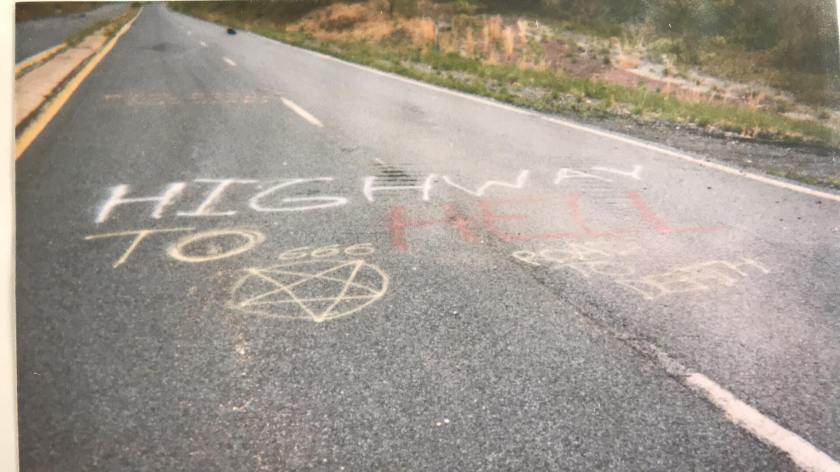
This is what the closed section of the abandoned highway looked like in 2001-2005, when we made yearly trips. There were a few graffiti marks right at the beginning of the road, and then it was desolate for a mile or so. Centralia is the type of place where you can feel that you are passing from the ordinary to the strange.

Centralia2003

Centralia is a living legend. The coal fires still burn, but not as noticeably as twenty years ago. The deep fissures in the abandoned highway (which a grown man could stand in, at one time) have been filled in. A few more houses have been torn down. In 2003 you knew when you were in the ‘center’ of Centralia. There was a manicured park in the center of town, a grouping of homes near the crossroads. I went back in the summer of 2017 with my kids and I drove past the town!

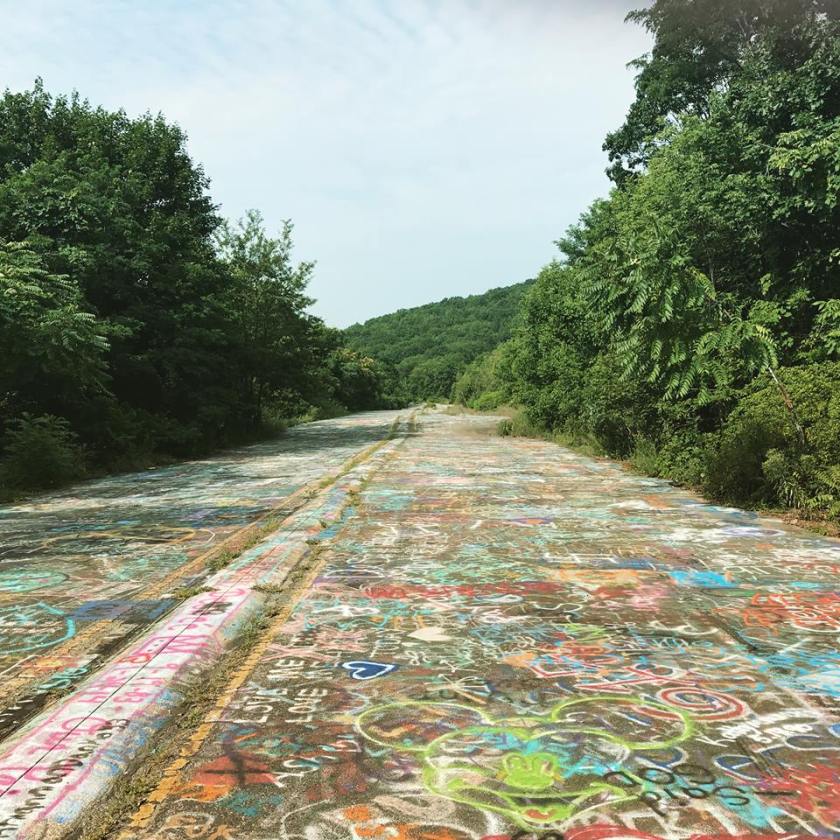
Here is the same abandoned highway(pictured above) in 2017:

centralia2017

I don’t know that I’m upset with what Instagramers have done in terms of popularizing this special place. The graffiti/rainbow road is something different, almost worthy of notoriety in its own right. Centralia is a living thing, its legend is only growing. I don’t know that I’d want to go on the same legend trip twice.

John and I write weird fiction with real places like Centralia in mind. Locations that we sometimes even name(or just mildly obscure) that a reader can visit for themselves. At the Cemetery Gates: Year One and Corpse Cold: New American Folklore are riddled with these locations. These places we’ve visited as kids and adults, and have been inspired to re-imagine. We’re contemplating putting together a collection of stories that focus on real, strange locations in Upstate New York, with photographs and a map, something one could travel in a day or a couple of afternoons.

-Joe Sullivan

“Happy Death Day” Spoiler-Free Review: Fun But Not a True Slasher

Uncategorized

By Joe Sullivan

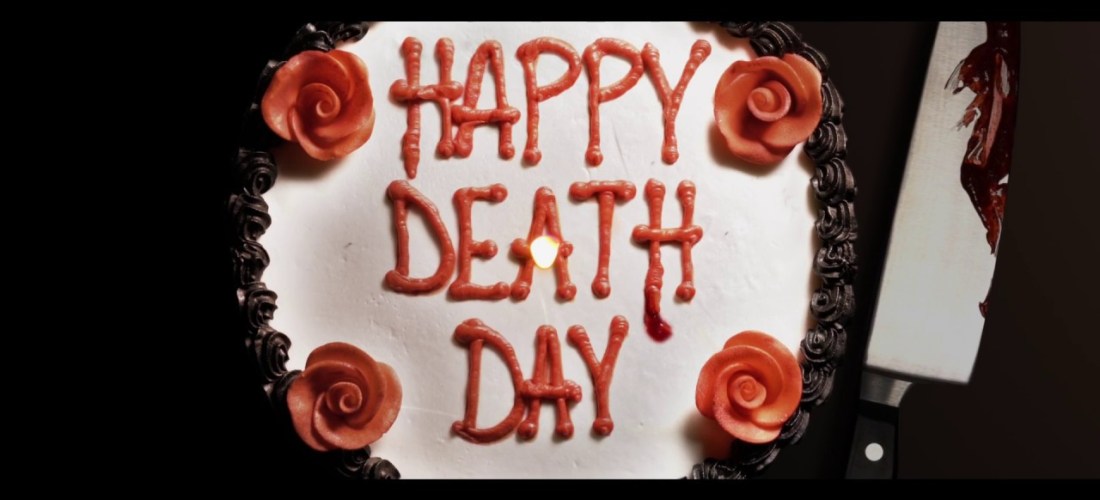
There has never been an era of the PG-13 slasher, for good reason. Violence, the shock and awe of any classic R-rated slasher, sells itself best to the most impressionable of minds. Halloween and Friday the 13th were carried into the iconography of our culture by 12-year-olds who bore witness to the sort of movie the MPAA deemed unsuitable for their eyes. There is no proper ‘best of’ list for PG-13 slasher films. Happy Death Day is no exception. PG-13 slasher movies can’t properly function as slasher movies. Yet, Happy Death Day is certainly a fun, flavorful movie in other regards.

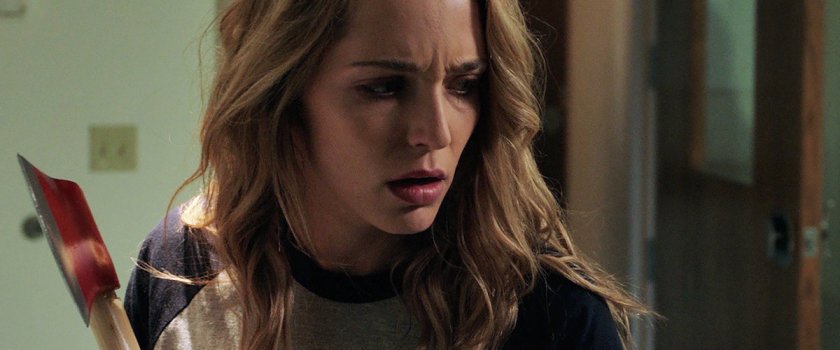
Tree (Theresa) keeps waking up in Carter’s dorm room, and she relives the same Monday, over and over, which always culminates in her death at the hands of a baby-masked killer. The filmmakers have fun with the premise, and I did enjoy the Clue-style whodunit mystery. Tree eliminates a suspect with each subsequent revival, and I found myself anticipating a satisfactory resolution – that one of the cast of characters we’ve encountered, again and again, would finally be unmasked as the killer. So, I was let down when a new, Mrs. Voorhees-level-of-unknown was thrown into the cast of suspects late in the movie.

deathday

Happy Death Day revels in pop-culture snark, creates characters filmgoers wouldn’t mind see dying, and nearly gives Tree a proper character arc during her Sisyphean day. Carter, Tree’s sometimes assistant/sometimes love-interest, is easily the most likable character in the movie. When Carter is put into a risky situation, you genuinely want him to survive. However, the film will fail to convince many viewers regarding whether Tree should ultimately survive. She is too rotten of a person, and even on days she makes progress, she seems to undermine said personal improvements, with subsequent revivals.

The deaths in the movie were uninteresting, and this alone should alienate a large part of the genre fan base. Happy Death Day is by no means a slasher film, and certainly has no relationship to the day or month it came out. The movie has no ‘creepy’ factor, which seems to be what drives most genre movies released in October, or on Friday the 13ths.

Happy Death Day does have some suspenseful moments, and is a curiosity in its choice of story form. Ultimately, it feels like its audience might be the parents of thirteen-year-olds. Folks who grew up with Scream and such movies from the late-90s, and want to share something with an impressionable young mind in their household – without venturing into the world of the extremes we’ve come to expect from a genre slasher film like the upcoming Jigsaw.

hero_Happy-Death-Day-2017

Who would I recommend this movie to? Fans of late-90s R-rated slashers. It’s more fun than the When a Stranger Calls remake – more like watching a Jawbreaker/Urban Legend crossover.

7 Tales From “Scary Stories to Tell in the Dark” That Freaked Me Out (And Still Do)

Blog, Uncategorized

By John Brhel

Scary Stories to Tell in the Dark was one of my favorite book series when I was younger, despite the fact that many of the stories terrified me to no end. Here I was, 8, 9 years old, reading about beheaded roommates and knife-wielding maniacs. Jeremy Thatcher, Dragon Hatcher, this was not.

Most of the tales in Scary Stories that used to scare me when I was a kid just make me laugh now (“The Big Toe,” really?) but there are a handful that still leave me unsettled. Here’s a few of my favorite traumatizing tales!

“The Thing”

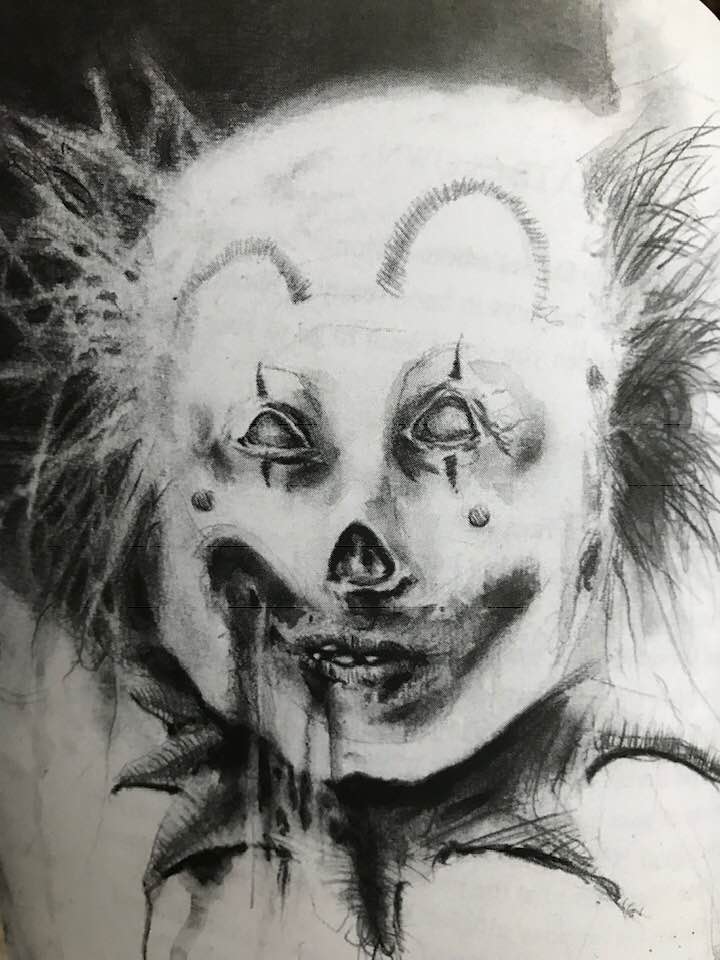
IMG_0973

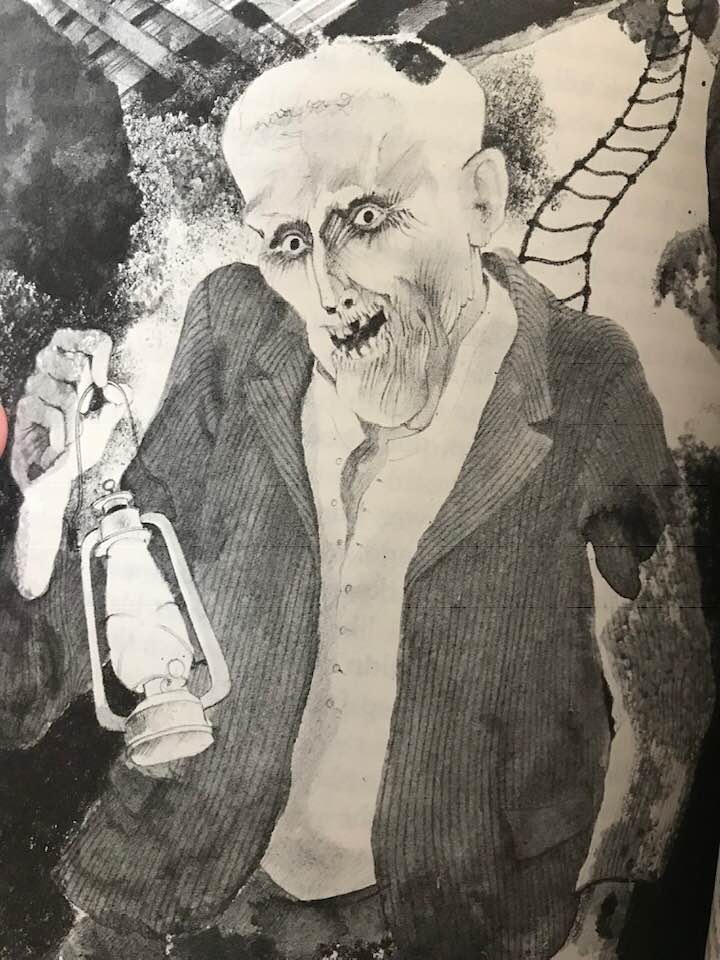
Just look at that nightmarish thing! And that’s what it is, The Thing. Even in gathering photos for this post, I got residual childhood chills from seeing this guy’s face again. The plot here is pretty threadbare: a skeletal-looking man/zombie/ghoul follows two boys home and watches them from across the street. But the combination of this image and the idea of being helpless as some weirdo followed me home (where’s your parents, kids?) made this one stand out for me. I seriously couldn’t look at that drawing, and I don’t enjoy it too much now.


“The Window”

IMG_0968

When I first read this story, I lived on a semi-rural road, across from which was an empty field. My bedroom window looked out at the field, and the bottom of the window was really low, so anyone could just walk right up and look in on me while I was sleeping if they wanted to. This story, which tells of a young woman who watches helplessly from her window as a yellow-eyed creature (later discovered to be a vampire) slowly stalks toward her home, freaked me the hell out and only served to make my bedroom window even more terrifying. I probably begged my parents to move me to a different room because of this tale.

“Harold”

IMG_0963

This story features one of the most disturbing final scenes in anything I’ve watched or read to this day, for which it wins the “How The Hell Did This End Up In My Elementary School Library? Award.” In this tale two farmers, Thomas and Arnold, make a scarecrow to pass the time in their boring cow-milking lives. They name it after another farmer they dislike and proceed to treat it like dirt, taunting the dummy, smearing food in its face. When Harold begins to grunt and scurry around the roof of their hut at night, Thomas and Arnold flee. In their haste, they forget their all-important milking stools (hate it when that happens). Thomas has to go back to get the stools. But when Alfred looks back at the hut for Thomas, all he sees is Harold stretching out his buddy’s bloody skin on the rooftop. WTF! There’s a reason why this tale always comes up in discussions of Scary Stories. It’s straight-up insane.


“One Sunday Morning”

IMG_0971

I was raised Roman Catholic, so I spent many a dull hour at Sunday morning Mass. This story, which tells of a man who unknowingly stumbles upon a church service open only to a parish of the undead, struck a chord with me. I think it was mainly the idea of feeling like you’re in a safe place — I mean, what’s more peaceful and non-threatening than a church? — and finding out that not only is it unsafe, but that the people in there want you dead. This is probably why I don’t go to church anymore. Yeah, that’s the reason.


“The Bride”

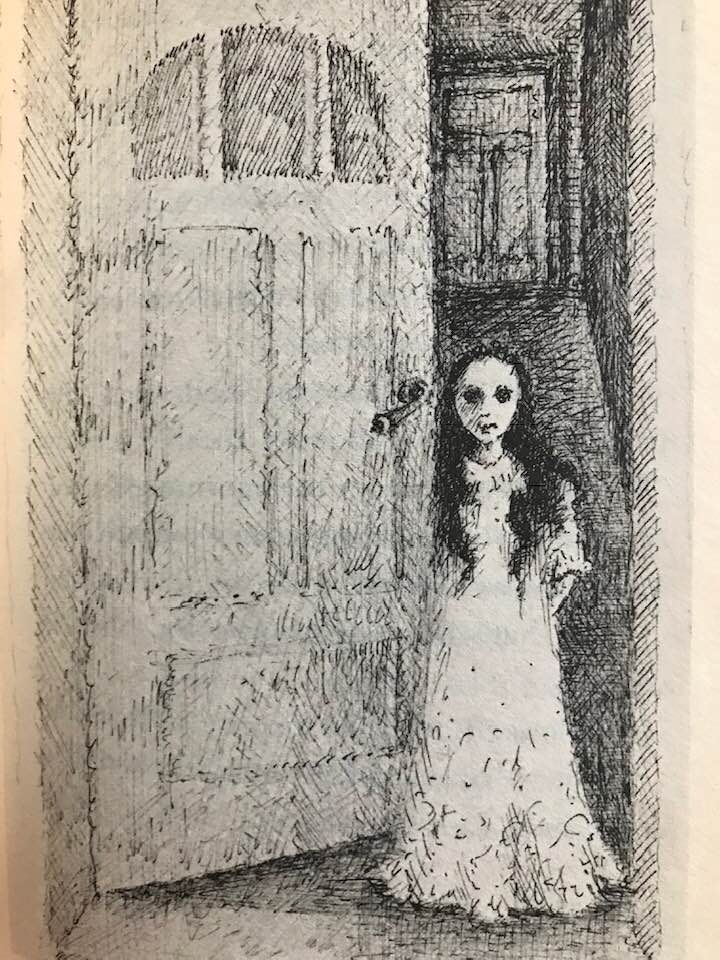
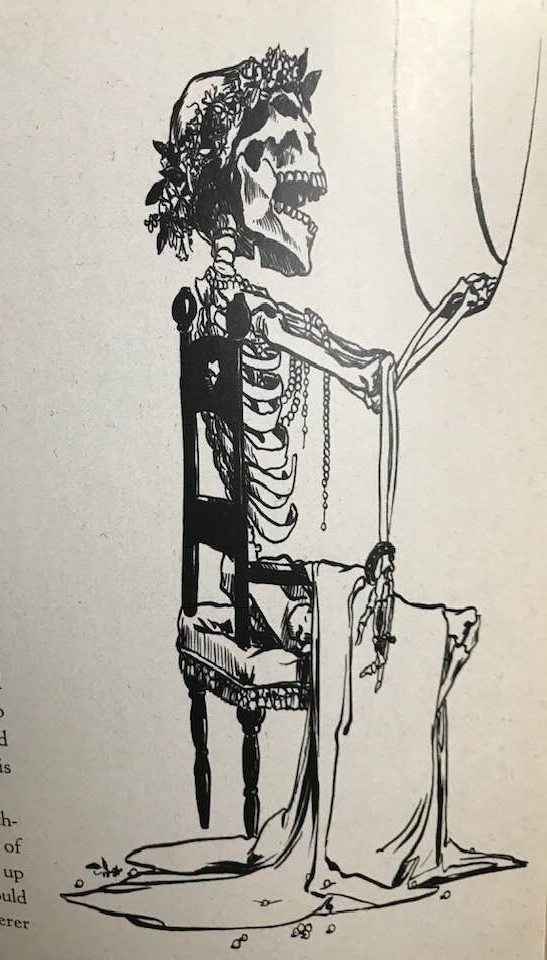
img_0970

Every kid knows what it’s like to play hide-and-seek, so every kid can relate to the terrifying prospect of being trapped in a hiding spot, never to be found. I was probably playing a lot more Nintendo Entertainment System than hide-and-seek when I first read this story, but that didn’t make it any less terrifying.


“Maybe You Will Remember”

IMG_0964

You can blame probably this story, the “waking up in a bathtub with your kidney removed” urban legend and the movie Hostel for me never wanting to travel abroad. In this story, a young woman’s mother mysteriously disappears while they are vacationing  together in Paris. The daughter insists that she and her mother were renting out room 505, but it’s revealed that the room was nothing like she remembers, and no one can recall ever meeting her mother (spoiler alert: her mother had died from some virus and authorities were trying to quell any public hysteria). The idea of losing one’s mother is terrifying, especially when you have no idea of her actual fate. I’m fine never leaving North America, really.


“Faster and Faster”

IMG_0967

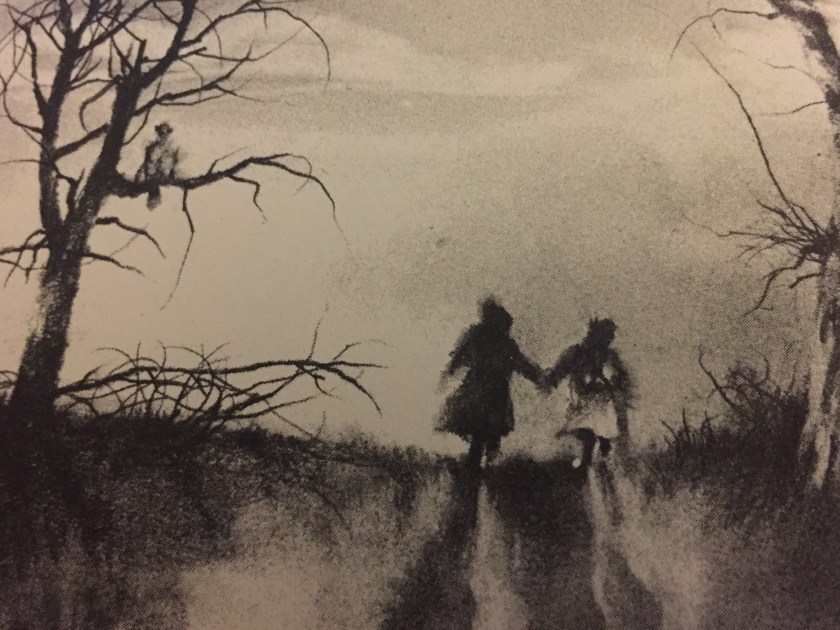
This story doesn’t come up in a lot of discussions about Scary Stories, but I think it’s worth a mention. In it, two cousins find an old, blood-stained (yeah, that’s normal) drum. For some reason, when they play the drum, phantoms on horseback come and shoot an arrow at one of them, killing him. I couldn’t believe what I was reading back then — some kid actually getting killed by a ghost! Most children’s books wouldn’t have more than a ghost simply saying “Boo!” but Alvin Schwartz was down with murder. You’re the boss, Alvin.

John Brhel is the co-author of Corpse Cold: New American Folklore, a 20-story illustrated collection greatly inspired by the Scary Stories to Tell in the Dark series. Learn more about Corpse Cold. 


CORPSE COLD: NEW AMERICAN FOLKLORE is live on Kickstarter!

Uncategorized

Our new book, Corpse Cold: New American Folklore, is now live on Kickstarter. 17 fully illustrated spook stories inspired by 80s and 90s horror. If you grew up reading books like Scary Stories to Tell in the Dark, go back us on the project page!

https://www.kickstarter.com/projects/1004065989/corpse-cold-new-american-folklore/widget/video.html

Switches (from CORPSE COLD: NEW AMERICAN FOLKLORE)

Uncategorized

Switches_01

It was late, and I was nodding at the wheel as I traveled a rural highway somewhere between Cortland and Binghampton, New York. I’d planned to get out of my work meeting before ten, but it wasn’t until a quarter to midnight that I finally settled into the leather seat of my Cadillac ATS. I knew the dangerous game I was playing, taking the chance of falling asleep at the wheel. So it seemed like divine intervention when a dated, orange fluorescent sign appeared on the horizon.

I slowed as I passed McGirk’s Roadside Motel. It was a small motel, to say the least, with maybe 6-8 guest rooms. When I saw there was still ‘vacancy,’ I pulled into the parking lot, sluggishly got out of my car, and headed toward the office. I had no bag or toiletries, as this was an unplanned overnight.

When I entered the office, I was greeted by a greasy, uneasy looking motelier, who was sitting behind a tall desk. “Hey. Are you lost?”

“Uh, no… I’m tired. Is there a room available?”

The man behind the desk smiled broadly, which made me feel a little better about my choice to stop. I really didn’t want to sleep in my car in some farmer’s field or forested pull-off. “We have one more room available,” he said, distracted by something he’d spotted in his dimly lit parking lot. “Is that a Cadillac?”

“Yep,” I replied. “Can I have the room? I can pay with my card, or cash if you prefer.”

The motelier hesitated as he absentmindedly picked at his grimy, white t-shirt. “I don’t know if you’ll want this particular room.”

I waited for the man to continue, to offer some sort of explanation, but he didn’t. The overhead light flickered as I approached the desk. “So… What? You have at least six rooms here. Are there any others available?”

“No, sorry. All of the other rooms are occupied. I have just the one tonight.”

“My car is the only one out there…” I sighed. “Whatever.” I knew I probably wasn’t thinking all that clearly, due to my lack of sleep. “What? Does it have bedbugs, roaches, or something?”

The motelier visibly grimaced at my mention of vermin. “Of course not! It’s a perfectly clean room.”

“Then I’ll take it.” I dug for my wallet, then pulled out my ID. “Cash or credit? Here’s my license.”

The light flickered again, as the motelier wrote down my information. “Mr. Sellers, I feel obligated to warn you – some people believe that Room 7 is, uh, haunted…”

I couldn’t help but laugh. “Sure, buddy.”

The man handed me back my ID and credit card, and set a room key on the desk. The bronze key hung from a red, plastic identifier, which was embossed with a large, golden ‘7.’

“I’ve never seen a ghost. But it has been an issue for some of my guests, to say the least.”

I picked up the key, and was about to head straight for my room when my curiosity got the better of me. “What’d you mean, ‘an issue?’”

The awkward way in which the man fidgeted, before responding, made me uneasy.

“Some of our guests have insisted on changing rooms over it. And it has happened often enough that I don’t normally bother offering the room.”

“But you’re completely booked tonight – all, what, eight rooms?”

The motelier nodded. “Correct, Mr. Sellers. Now that you’ve joined us, we have no more vacancies.”

“So, enough people have been changing rooms due to ghosts – immaterial beings – that you only offer seven of your eight rooms?” I couldn’t help but chuckle. “You’d be surprised what kind of business marketing you could do with that online…Uh, are you McGirk?

“Yes, I’m the owner. Chester McGirk,” he replied. “And it’s not what they see that troubles them.” McGirk lowered his voice, as if he were afraid of being overheard. “It seems to be the things they hear.”

“Well, I don’t believe that ghosts can exist. So, I think I’ll be fine.”

McGirk didn’t press the issue; he wished me a good night, then I hurried to Room 7 to try and get some sleep. I had an incredibly important sales meeting in Binghampton the following morning, and would have to get up in less than six hours to have enough time to make my appointment.

When I opened the door to Room 7, I was taken aback by a wall of musty, stale air. It was as if the room had been sealed for years. There was a queen-sized bed with a nightstand, the typical TV setup opposite the bed, and a single chair. The bathroom was tiny; the toilet just barely fit between the sink and bathtub.

After a closer inspection, I decided the room was clean enough, and I couldn’t have cared less about its dated furnishings. My only aesthetic critique was that the main overhead light was a bare bulb. Sure, there were other covered, even decorative, wall lights. But the focal point of the room was certainly the unseemly, dangling abomination.

I knew I wouldn’t have to stare at it for too long, though, as it was pushing half-past midnight. So I undressed, flipped the switch near the door to turn off the overhead, and went to bed.

I gradually awoke to the specter of the illuminated, bare bulb above me. There was nothing sudden, or even startling, about my transition to consciousness. I turned to my side and saw that it was only 2:30. I grumbled, then calculated that I had only been asleep for two hours, and that I would have to get up in another three-and-a-half.

I didn’t immediately get out of bed and go shut off the light either. The switch was near the door, and even the five paces it would take to extinguish the light seemed an effort.

I considered trying to sleep with the light on, I was so fatigued, body and mind. I watched a few moths and a housefly dip around the bare bulb for a couple of minutes before I sat up. The fact that it attracted bugs was motivation enough for me to go and turn it off.

I swear, as soon as I flipped the switch to the ‘off’ position, the light in the bathroom turned on. “Some ghost,” I grumbled, laughing to myself as I lumbered into the bathroom, and then flipped that switch which, at first, didn’t respond. It took a few flips before the light bar above the bathroom mirror faded. When all was again dark, I hesitated, reminiscing about the Bloody Mary and Candyman games I used to play with my sister in front of dark mirrors. When no ghoul appeared in the glass  – not that I actually chanted any names – I laughed to myself and returned to bed.

I was comfortable, back under the covers, when one of the light sconces above the bed came to life. “The hell?” I had to sit up to turn it off, and as soon as that light was extinguished, the other sconce flickered on. To get at that one, I had to move to the far side of the bed and strain in order to spin the small switch to the ‘off’ position.

“Ha! Jesus. I’m out of breath.” I collapsed to the bed, irritated, though slightly amused by it all. As soon as my head hit the pillow, the hanging bulb above once again illuminated. McGirk must be bored tonight, I thought. I was positive now that the motelier was the one manipulating the lights. That McGirk might be watching certainly bothered me, but the reason I began to fume was the thought that I, Richard Sellers, might seem like the sort of guy that could be messed with.

I tossed the blankets aside, put on my shoes, and stormed out of Room 7 in only my boxers and T-shirt. But when I barged into the motel office and up to the counter, I found McGirk asleep in his chair. I noisily cleared my throat, and the motelier startled awake.

“Oh! Christ! What’s wrong?!” McGirk quickly stood and looked me up and down.

I felt like a complete idiot. McGirk had certainly been asleep, and here I was confronting him in my underwear. “Sorry…sorry to bother you. I… um… I’m having a problem with my lights. They won’t stay off.”

McGirk’s eyes widened. “I see. Yes. It’s difficult to sleep with the lights on – this is certainly an issue.” McGirk looked around the room, as if he were searching for an easy answer. “I’m sorry, Mr. Sellers. We have had some problems. The building hasn’t been updated – as you’ve probably seen for yourself. Plumbers and electricians are difficult to get a hold of, especially all the way out here.” McGirk tapped his fingers wildly on the desk. “I can offer you a sleeping mask, or I can come take out the bulbs…”

I waved the motelier off while I backed toward the door, as I was now pretty embarrassed. “Forget it. I can manage. I’m sorry for bothering you over something so minor.”

“Think nothing of it,” said the motelier, as I hurried out of the office and back to my room.

Back in Room 7, the bare bulb shined brightly above my bed, with a few furry moths and a housefly orbiting it. I lay below, and buried my head beneath the comforter. It was quiet enough in the room; I knew I could still manage a few hours of sleep. Even the bugs periodically knocking against the glass of the hot bulb didn’t bother me. It was almost hypnotic.

But as I began to drift into the twilight of a shallow slumber, I was startled awake by the sound of a mechanical clanging. I tossed the covers from off my head and discovered the source of the noise. The ancient air conditioner beneath the room’s sole window had kicked on, and was certainly not working as intended.

It was a cool, October night. There was no reason for the AC to turn on. The clanging had grown even louder as I honed in on it. I was frightened by the sound, the intensity of it, the fact that it was escalating.

My attention was soon drawn back to the bulb above the bed. It was now flickering and swinging gently on its hanging wire.

Sure, the bugs could be responsible for the flickering and the swaying of the bulb, I thought, but what was causing the mechanical banging and grinding of the air conditioner?

I got out of the bed to investigate, creeping ever-so-gently across the dingy carpet toward the window, and the AC unit beneath it. I paused when the fan whirred to life inside the unit. And when I bent over to have a closer look, a flurry of flies swarmed around me from the old machine. I searched nearby for something to defend myself, while swatting at the flies that began landing on my face and in my hair.

“Fuckin’ flies!” I screamed, as I slapped at the bugs in the air around me. I spit out a few that had made it into my mouth, while I searched the nightstand next to the bed. I found a Gideon Bible and used it to defend myself, smacking the wall and the pests gathering on the headboard.

As I killed handfuls of the black houseflies with every swing, the two light sconces above the headboard came to life, and then, as quickly, sparked and blew out. I noted how blackened the tops of the bulbs had become. But I didn’t have much time to consider the blown wall lamps, as the bare bulb above me then unceremoniously shattered. Whether from the force of the flies colliding with it, or due to an errant swing of the Bible, I had no answer. My only sense was to gather my things in the infested room, swim through the flies that buzzed around my face, and leave behind the wild clanging and whirring of the mad air conditioner.

I fought the flies, and a few moths, as I fled the room and got into my Cadillac. The motel’s office was now dark, and I wasn’t about to make a fool of myself again in front of McGirk. I was too upset, and sickened, over what had occurred – but I really was dead tired, even after all the excitement, and was eventually able to fall asleep in my reclined seat.

It was well past dawn when I awoke in the lot at McGirk’s Roadside Motel. My back and neck were sore from sleeping in the car, though I noted that I did get a couple hours of deep, refreshing sleep. The car’s windows were fogged over, and it was especially chilly outside, and was quickly becoming uncomfortable.

I started the car, intending to warm it up and clear the windows for the rest of my drive home. I groaned at the thought of having to go find the key, which I’d dropped in the room during my escape. I definitely didn’t look forward to having to return the key to the motelier, and likely having to explain why I had slept in my car.

But I soon discovered that I would be saved from further embarrassment. As the windows defogged, the scene at McGirk’s gradually revealed itself. The motel was all but gone. In its place was a burnt-out husk, a whisp and dream of a building that I was forced to re-imagine. The motel office, which had the most structure to it, was merely a blackened slab of a partial rear wall, with some crumpled copper plumbing protruding from it. There was vegetation where Room 7 should have been; the foundation looked like it had been grown over for years.

I got out of my car and tentatively inspected the area. The motel wasn’t really even a shell of itself anymore. It was pretty obvious that a fire had occurred. There was char littered around the foundation, and I could make out various burnt debris scattered among the weeds. I walked the paved path that would have led from the office to the room where I had stayed the previous night, or, at least, where I believed I had stayed.

I was about to end my investigation and return to my car when I saw it, a few yards off among the weeds and bush. A red, plastic identifier on a key ring stuck out of the soil. I pulled it out and saw that the key ring still held its key. I turned over the plastic tab and saw that it was embossed with a large, golden ‘7.’ It was my room key, and it hadn’t decayed or been worn by the weather! I tossed the key and scrambled back to my car. It made no sense to me, and I was afraid of what I might uncover if I stuck around.

Not five minutes down the road, I came to a gas station. I saw a female attendant outside, adjusting the gas prices on the big overhead sign. So, I pulled in and the woman greeted me.

“Excuse me, ma’am. Do you know of any motels nearby?” I waited anxiously on her response, curious as to whether or not she’d refer me to McGirk’s Roadside Motel.

“Yeah, definitely. There’s the Deep Well in Harford Mills and The Sunrise in Richford.”

“Thanks. But wasn’t there one closer nearby?” My voice wavered, revealing my anxiety. “McGirk’s something or other Motel?”

The attendant didn’t immediately reply. She eyed me and my car for a few moments before responding: “You must’ve been by before McGirk’s Roadside burned down. I used to actually clean for Chester – the owner – part-time.”

“And how long ago was that?” I asked, my heart thumping in my ribcage.

“About ten years, I’d say. Chester was a cheapskate; God rest his soul.” The woman made the sign of the cross before continuing: “He got ticketed by the fire marshal, I don’t know how many times. But it was definitely an electrical fire. He had just about a full-house the night of the fire. Seven people died.”

“I’m sorry to hear that, ma’am. It’s too bad.”

“Yep, it was; and it’s all on Chester,” the woman replied, matter-of-factly. “Christ, I remember how the lights used to flicker off and on, and all sorts of things used to go haywire while I was cleaning the rooms. You’d think the place was haunted, or something!”

Order your copy of Corpse Cold: New American Folklore at Amazon!

New book of illustrated spook stories inspired by ‘80s and ‘90s horror launching on Kickstarter on Sept. 30

Uncategorized

cropped-cropped-untitled-design-11.png

EMBARGO DATE: SEPT. 30

New book of illustrated spook stories inspired by ‘80s and ‘90s horror launching on Kickstarter on Sept. 30

Corpse Cold: New American Folklore to feature 17 fully illustrated campfire tales

BINGHAMTON, NY — Corpse Cold: New American Folklore, a new book inspired by horror from the 1980s and 1990s, is coming to Kickstarter on Sept 30.

Corpse Cold: New American Folklore features 17 chilling campfire-style legends, written in homage to classic horror series like Scary Stories to Tell in the Dark and Fear Street, intended for adult readers. The book is co-written by authors John Brhel and Joe Sullivan, and each story is accompanied by a macabre illustration by artist Chad Wehrle.

“We grew up watching Twilight Zone and Are You Afraid of the Dark? and reading books like Washington Irving’s The Sketch Book and various American horror anthologies,” said Brhel. “The unsettling stories and imagery found in books like Scary Stories to Tell in the Dark made an impact on Joe, Chad, and myself, all the way back in elementary school. In fact, those books are one of the biggest reasons why we write today. With Corpse Cold, we hope to provide that same sort of reading experience for people like us — readers who are grown up, but still nostalgic for creepy art and new takes on well, and lesser known, urban legends and folktales.”

Brhel and Sullivan have co-written several books of paranormal and weird fiction, including Tales From Valleyview Cemetery (2015) and At The Cemetery Gates: Year One (2016). They are launching their Kickstarter campaign to cover production costs for the book, as well as artist fees.

A selection of stories to be included in Corpse Cold: New American Folklore:

“Moss Lake Island”

A carefree getaway in the Adirondacks takes a terrifying turn when two friends stumble upon an island inhabited by witches…

“Two Visions, 1984”

A journalist on his way to cover an event with President Ronald Reagan picks up a hitchhiker with a series of visions regarding his future…

“The Woman on the Campus Green”

A college student with a dark family history finds himself the subject of a strange secret admirer…

“Black Dog”

Two teenage brothers encounter the strange creature that their father had warned them about since childhood, while hunting in the woods near their home…

“Autoplay On”

A man falls asleep watching a playlist of internet videos and ends up playing a clip he was never supposed to see…

To view a preview of the Corpse Cold Kickstarter campaign, visit http://bit.ly/corpsecold.

For more information on Brhel and Sullivan, visit the following pages.

Facebook: facebook.com/cemeterygatesmedia

Instagram: instagram.com/cemeterygatesm

Website: cemeterygatesmedia.wordpress.com

Whoa, it’s been a while.

Uncategorized

giphy.gif

Since it’s been more than eight months since we last posted, it’s high time we provided an update on our doings.

Corpse Cold: New American Folklore is the title of the short story collection we are working on Chad Wehrle, the immensely talented artist who created the covers for our books Tales From Valleyview Cemetery and At the Cemetery Gates: Year One. Unlike those books, however, this one will feature illustrations for each story, some with multiple drawings. We’ll provide more news on that in the near future.

We will be making an appearance at the annual RoberCon, a two-day science-fiction/fantasy convention that takes place in our hometown of Binghamton, N.Y.  Our four books will be available for sale, and John will appear on two panels: one discussing the hit Netflix show Stranger Things and the other covering the history and current state of the horror genre.

We are working on a collection of paranormal love stories, tentatively titled Her Mourning Portrait and Other Paranormal Oddities. We will announce more as we get closer to completion.

New Holiday Novella: Carol for a Haunted Man

Cover Reveals, Uncategorized

Available at Amazon!

haunted-man-cover

CAROL FOR A HAUNTED MAN is the tale of a daunted man’s will to succeed in the face of despair. It is a novella inspired by, and in homage to, the Christmas stories of Charles Dickens.

As some authors dream into the history of their town or city, Jacob Martin sought to reestablish the comforts of his childhood by moving back to the street where he grew up. Lost in life, newly divorced, and separated from his three young kids, Jacob is driven to write a book worth remembering, as a way of giving his life a new lasting purpose and meaning.

Finding himself at a standstill on the novel, a lonely recluse during the holidays, Jacob manages to connect with an attractive woman, and befriend an older man from his distant past, an author like himself. As Jacob soon discovers, nostalgia can be a healthy distraction, or it can be the noose by which one hangs.